Reviews 2
Finding Jericho By Dave Jeffery
The Big-Headed People by D. F. Lewis
The Angry Red Planet by Ralph Robert Moore
Compromising The Truth by Bryn fortey
The hungry ones by Elana Gomel
Infinite Dysmorphia Edited by Pete Sutton and Kate Coe
Frequencies of Existence by Andrew Hook
The Architect by Brendan Connell
My Dead and Blackened Heart By Andrew Freudenberg
Abiding Evil by Alison Buck
The Heel by Brendan Connell
Hell Ship by Benedict Jones
Weirdmonger by D. F. Lewis
La Femme Edited by Ian whates
Dark Satanic Mills Edited by Steve J Shaw
Resonance & Revolt by rosanne Rabinowitz
Terror Tales of Northwest England Edited by Paul Finch
Cold Turkey by Carole Johnstone
The House of Frozen Screams by Thana Niveau
Breaking Point by Kit Power
The Drone Outside by Kristine Ong Muslim
Broken on the Inside by Phil Sloman
Angels of the Silences by Simon Bestwick
The Signal Block and Other Stories by Frank Duffy
Abolisher of Roses by Gary Fry
The House of Canted Steps by Gary Fry
A Tour of Beaujardin by Marc Lowe
Sein und Werden: Pharamcopoiea edited by Rachel Kendall
Review page 3
Review Page 1
FILM REVIEWS
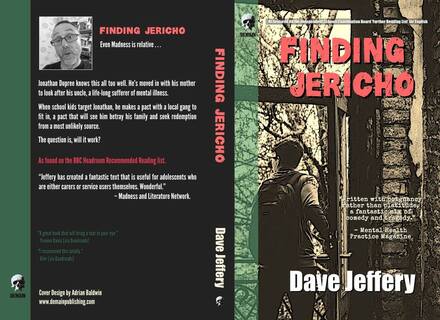
FINDING JERICHO by Dave Jeffery
Finding Jericho is at once a compelling and touching story of adolescence and growing up, and an examination of the effects of mental illness on the individual, their family and their friends. It is both page-turner and thought provoker and it certainly changed my view of mental illness and my use of it as an instrument in my writing toolbox.
There is a family at the heart of the novel, a believable, damaged family that has been placed under immense strain. The relationships are spikey. They have moved into a new area and for the main character, Jonathan, there is the the social jungle of a new school to negotiate. This on top of everything else he has had to handle in his young life.
For me, there was an interesting blurring of the lines between “traditional” mental illness and forms of it we may not recognise as such. Jonathon gains an ally at the school, but that so-called friendship comes at a price. He finds himself in the thrall of a bully who is, on the surface, an unpleasant manipulative brute. But why is he like that? What damage has he suffered to make him use the threat of physical violence to achieve what he wants? It caused me ponder on the fact that so many of the “villains” and “monsters” who stalk the pages of horror and crime novels could be seen as damaged beings suffering from some form of psychosis. It is a thin line of course. To be hurt by someone suffering from a psychological or psychiatric condition seldom engenders sympathetic emotions in the victim. But, for me, this book begs the question, when does the monster become the victim?
Jonathon has an uncle who suffers from a “traditional” mental condition, which makes him difficult, disruptive and a burden to Jonathon because he suffers, in turn, from the ignorance of others. Sadly, the stigma of mental illness is not confined to the sufferer. The wearisome trial of caring for someone who is mentally ill is vividly portrayed in this novel. Sensitive as it is, Dave Jeffrey does not shy from the negative emotions and sheer grind of being a carer and the unpredictable nature of the illness at the heart of the story.
Structurally, Finding Jericho is unusual. There is a teenage love story, which is awkward, gauche but immensely touching. Layered onto this is tension and threat. The centrepiece, however, is a conversation in a derelict house that is always compelling and startling.
Beautifully written, Finding Jericho is a brave novel that draws the reader in, never fails to surprise and presents us with a cast of varied and flesh-and-blood characters. Above all, it is an important book, a cliché, I know, but I stand by the statement. Read it for yourself and you’ll see exactly what I mean.
FINDING JERICHO by Dave Jeffery
Demain Press
Buy it HERE
Finding Jericho is at once a compelling and touching story of adolescence and growing up, and an examination of the effects of mental illness on the individual, their family and their friends. It is both page-turner and thought provoker and it certainly changed my view of mental illness and my use of it as an instrument in my writing toolbox.
There is a family at the heart of the novel, a believable, damaged family that has been placed under immense strain. The relationships are spikey. They have moved into a new area and for the main character, Jonathan, there is the the social jungle of a new school to negotiate. This on top of everything else he has had to handle in his young life.
For me, there was an interesting blurring of the lines between “traditional” mental illness and forms of it we may not recognise as such. Jonathon gains an ally at the school, but that so-called friendship comes at a price. He finds himself in the thrall of a bully who is, on the surface, an unpleasant manipulative brute. But why is he like that? What damage has he suffered to make him use the threat of physical violence to achieve what he wants? It caused me ponder on the fact that so many of the “villains” and “monsters” who stalk the pages of horror and crime novels could be seen as damaged beings suffering from some form of psychosis. It is a thin line of course. To be hurt by someone suffering from a psychological or psychiatric condition seldom engenders sympathetic emotions in the victim. But, for me, this book begs the question, when does the monster become the victim?
Jonathon has an uncle who suffers from a “traditional” mental condition, which makes him difficult, disruptive and a burden to Jonathon because he suffers, in turn, from the ignorance of others. Sadly, the stigma of mental illness is not confined to the sufferer. The wearisome trial of caring for someone who is mentally ill is vividly portrayed in this novel. Sensitive as it is, Dave Jeffrey does not shy from the negative emotions and sheer grind of being a carer and the unpredictable nature of the illness at the heart of the story.
Structurally, Finding Jericho is unusual. There is a teenage love story, which is awkward, gauche but immensely touching. Layered onto this is tension and threat. The centrepiece, however, is a conversation in a derelict house that is always compelling and startling.
Beautifully written, Finding Jericho is a brave novel that draws the reader in, never fails to surprise and presents us with a cast of varied and flesh-and-blood characters. Above all, it is an important book, a cliché, I know, but I stand by the statement. Read it for yourself and you’ll see exactly what I mean.
FINDING JERICHO by Dave Jeffery
Demain Press
Buy it HERE
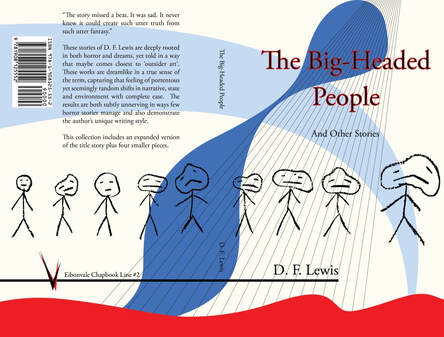
THE BIG-HEADED PEOPLE by D. F. Lewis
Here we are again in the dream-like world of D. F. Lewis. The Big-Headed People is a slim volume that features the longer title story plus a handful of other short works.
The protagonist of The Big-Headed People has, as the title suggests, an extraordinarily large head. He is an outcast until he is told by someone with a similar affliction that there is a place for people like them. Of course, this is the Lewis-verse, where nothing is simple, or as it appears to be, because after setting off for this near-mythical place, our hero suddenly finds himself court. For what? Well, this particular court of law is as Kafkaesque as any I’ve ever encountered, there seems to be no case to answer but the whole farce seems to revolve around a mysterious orange book. What does it all mean? i don't know, but I loved it nonetheless. That's the beauty of the fiction of Mr Lewis. Just go along for the mad ride and enjoy the sights.
D. F. Lewis once again opens the door to the oddly familiar, old-fashioned and yet slippery and unpredictable world his writing has created. There is an odd juxtaposition of jauntiness and menace, of the cosy politeness of a long-ago England and barely glimpsed, but certainly felt threat. There are monsters here and they are coming to get us, but none of the eccentric, bewildering and bewildered characters that inhabit these stories seem able to save us or themselves.
This little book is an ideal introduction to D. F. Lewis and I would recommend it wholeheartedly to anyone who loves the strange and off-beat. It’s a beautiful artefact, by the way, an excellent example of the gorgeous bookwork of its publisher, David Rix at Eibonvale Press.
THE BIG-HEADED PEOPLE by D. F. Lewis
Eibonvale Press
Buy it HERE
Here we are again in the dream-like world of D. F. Lewis. The Big-Headed People is a slim volume that features the longer title story plus a handful of other short works.
The protagonist of The Big-Headed People has, as the title suggests, an extraordinarily large head. He is an outcast until he is told by someone with a similar affliction that there is a place for people like them. Of course, this is the Lewis-verse, where nothing is simple, or as it appears to be, because after setting off for this near-mythical place, our hero suddenly finds himself court. For what? Well, this particular court of law is as Kafkaesque as any I’ve ever encountered, there seems to be no case to answer but the whole farce seems to revolve around a mysterious orange book. What does it all mean? i don't know, but I loved it nonetheless. That's the beauty of the fiction of Mr Lewis. Just go along for the mad ride and enjoy the sights.
D. F. Lewis once again opens the door to the oddly familiar, old-fashioned and yet slippery and unpredictable world his writing has created. There is an odd juxtaposition of jauntiness and menace, of the cosy politeness of a long-ago England and barely glimpsed, but certainly felt threat. There are monsters here and they are coming to get us, but none of the eccentric, bewildering and bewildered characters that inhabit these stories seem able to save us or themselves.
This little book is an ideal introduction to D. F. Lewis and I would recommend it wholeheartedly to anyone who loves the strange and off-beat. It’s a beautiful artefact, by the way, an excellent example of the gorgeous bookwork of its publisher, David Rix at Eibonvale Press.
THE BIG-HEADED PEOPLE by D. F. Lewis
Eibonvale Press
Buy it HERE
THE ANGRY RED PLANET by Ralph Robert Moore
The Angry Red Planet, Ralph Robert Moore’s comedy of manners, or should that be comedy of ill-manners, is an intense, blackly – and bleakly – humorous tour through the lives of an astonishingly, catastrophically angry marriage. It is The War of the Roses with a verbal rather than physical apocalypse. It is Who’s Afraid of Virginia Wolf without the whiplash wit (no disrespect to the author intended here the characters are not academics, their wordplays are more blunt instrument than razor blade).
Harry and Edna then, middle-aged, long-time partners and spouses, childless and at war. Edna is ill. She has suffered a string of surgeries (or sugaries, as she calls them, much to Harry irritation) and Harry is her carer. There is no filter between them. There are no barriers of propriety or allowance for hurt feelings. Oh, no, this is head-on, verbal and emotional brutality, each giving as good as they get. Harry is a particularly angry man and it isn’t just this wife who finds herself on the wrong end of his rage. Anyone and anything can squeeze the hair-trigger.
And yet. At the eye of this perfect storm of hostility, bitterness and outright hatred, there is an astonishing tenderness that breaks through and suffuses the jagged blackness with a softer, more revealing light. These two love each other. Harry is a tireless, patient carer. He never complains about the often unpleasant tasks he has to perform. He defends her. He does everything he can to make her life bearable. Harry’s anger is a quicksand. Bad luck and difficult circumstances are never enough. He has to struggle and lash out and sink even deeper. Even when offered a remarkable adventure, a new life, a chance to redeem himself, he finds it hard not to unleash his destructive tendencies.
The Angry Red Planet is a tour de force. It is compelling. It twists and turns, shocks you with one head-on collision after another. It plays your emotions mercilessly, lulling you into feeling some empathy for its monstrous protagonists then laughing at you while you flounder in the wake of yet another high-gee turn and wonder why you could have been so naïve. This novel is a profound examination of the many layers of the human character and a warts-and-all, eye-to-eye examination of the treacherous realities of love. Highly recommended.
THE ANGRY RED PLANET by Ralph Robert Moore
Buy it HERE
The Angry Red Planet, Ralph Robert Moore’s comedy of manners, or should that be comedy of ill-manners, is an intense, blackly – and bleakly – humorous tour through the lives of an astonishingly, catastrophically angry marriage. It is The War of the Roses with a verbal rather than physical apocalypse. It is Who’s Afraid of Virginia Wolf without the whiplash wit (no disrespect to the author intended here the characters are not academics, their wordplays are more blunt instrument than razor blade).
Harry and Edna then, middle-aged, long-time partners and spouses, childless and at war. Edna is ill. She has suffered a string of surgeries (or sugaries, as she calls them, much to Harry irritation) and Harry is her carer. There is no filter between them. There are no barriers of propriety or allowance for hurt feelings. Oh, no, this is head-on, verbal and emotional brutality, each giving as good as they get. Harry is a particularly angry man and it isn’t just this wife who finds herself on the wrong end of his rage. Anyone and anything can squeeze the hair-trigger.
And yet. At the eye of this perfect storm of hostility, bitterness and outright hatred, there is an astonishing tenderness that breaks through and suffuses the jagged blackness with a softer, more revealing light. These two love each other. Harry is a tireless, patient carer. He never complains about the often unpleasant tasks he has to perform. He defends her. He does everything he can to make her life bearable. Harry’s anger is a quicksand. Bad luck and difficult circumstances are never enough. He has to struggle and lash out and sink even deeper. Even when offered a remarkable adventure, a new life, a chance to redeem himself, he finds it hard not to unleash his destructive tendencies.
The Angry Red Planet is a tour de force. It is compelling. It twists and turns, shocks you with one head-on collision after another. It plays your emotions mercilessly, lulling you into feeling some empathy for its monstrous protagonists then laughing at you while you flounder in the wake of yet another high-gee turn and wonder why you could have been so naïve. This novel is a profound examination of the many layers of the human character and a warts-and-all, eye-to-eye examination of the treacherous realities of love. Highly recommended.
THE ANGRY RED PLANET by Ralph Robert Moore
Buy it HERE
COMPROMISING THE TRUTH by Bryn Fortey
Bryn Fortey is a story teller. He is one of those people who can spin a yarn, draw you in and keep you rapt as he unfolds whatever tale he has to tell. There’s a gleefulness to his writing, the feeling that here is an author who is sharing his flights of the imagination for the sheer joy of it. In both Compromising the Truth, and in its companion volume, Merry-Go-Round, Bryn Fortey unleashes a bumper-sized collection of varied, highly entertaining fiction. Some of what you’ll find it these pages is fun, dark but always enjoyable, some of what you encounter is deeply moving, particularly his supremely accessible poetry.
The opener, Ain’t That The Truth is a dark journey into the world of primitive blues music that results in a nightmare encounter with one of the less savoury characters who plied that musical trade. Space Jocks Yes! No! Yes! shows Fortey’s versatility in all its glory with a science fiction tale about the heroic astronauts who risk all to travel to the stars via a wormhole with little hope of returning. Time travel and its many paradoxes takes centre stage in The Road To Salamis, which boasts one of those abrupt, but satisfying, will-it-won't-it endings Bryn Fortey loves so well. Oink veers off into weird fiction, its protagonist haunted by a bizarre half human/half animal who is more than willing to deal with his problems for him. Unfortunately, the creature’s unwanted help gets out of hand, with bloody results.
The fiction is interspersed with themed clusters of poetry. I loved the potted biographies of blues and jazz musicians, vivid portraits painted by a few, well-chosen words, brief, yet vivid, insights into the hearts of those often tortured souls. In one of the poem-clusters you will meet a Dark-haired Italian Girl, and it is an intensely moving experience.
My favourites? Mum’s The Word, set in the world of B-movies in which an Ed Wood wannabe struggles with a has-been ham, a pop star-turned-movie-star and people who simply cannot act, as he strives to film his masterwork. Blackly humorous and compelling. The other treasure among treasures is Locust Days, a longer tale set in the darker corners of private security, organised crime and the rotten underbelly of the boxing game. It is a great tale that kept me turning the pages and featured a rogue’s gallery of unsavoury characters. That is another of Bryn Fortey’s strengths, his characters; vivid and loveable hateable, but always memorable.
So, if you feel like losing yourself in a big book of storytelling joy, get your hands on a copy of Bryn Fortey’s Compromising The Truth, and take a ride on his Merry-Go-Round while you’re at it.
COMPROMISING THE TRUTH by Bryn Forty
Alchemy Press
Buy it HERE
Bryn Fortey is a story teller. He is one of those people who can spin a yarn, draw you in and keep you rapt as he unfolds whatever tale he has to tell. There’s a gleefulness to his writing, the feeling that here is an author who is sharing his flights of the imagination for the sheer joy of it. In both Compromising the Truth, and in its companion volume, Merry-Go-Round, Bryn Fortey unleashes a bumper-sized collection of varied, highly entertaining fiction. Some of what you’ll find it these pages is fun, dark but always enjoyable, some of what you encounter is deeply moving, particularly his supremely accessible poetry.
The opener, Ain’t That The Truth is a dark journey into the world of primitive blues music that results in a nightmare encounter with one of the less savoury characters who plied that musical trade. Space Jocks Yes! No! Yes! shows Fortey’s versatility in all its glory with a science fiction tale about the heroic astronauts who risk all to travel to the stars via a wormhole with little hope of returning. Time travel and its many paradoxes takes centre stage in The Road To Salamis, which boasts one of those abrupt, but satisfying, will-it-won't-it endings Bryn Fortey loves so well. Oink veers off into weird fiction, its protagonist haunted by a bizarre half human/half animal who is more than willing to deal with his problems for him. Unfortunately, the creature’s unwanted help gets out of hand, with bloody results.
The fiction is interspersed with themed clusters of poetry. I loved the potted biographies of blues and jazz musicians, vivid portraits painted by a few, well-chosen words, brief, yet vivid, insights into the hearts of those often tortured souls. In one of the poem-clusters you will meet a Dark-haired Italian Girl, and it is an intensely moving experience.
My favourites? Mum’s The Word, set in the world of B-movies in which an Ed Wood wannabe struggles with a has-been ham, a pop star-turned-movie-star and people who simply cannot act, as he strives to film his masterwork. Blackly humorous and compelling. The other treasure among treasures is Locust Days, a longer tale set in the darker corners of private security, organised crime and the rotten underbelly of the boxing game. It is a great tale that kept me turning the pages and featured a rogue’s gallery of unsavoury characters. That is another of Bryn Fortey’s strengths, his characters; vivid and loveable hateable, but always memorable.
So, if you feel like losing yourself in a big book of storytelling joy, get your hands on a copy of Bryn Fortey’s Compromising The Truth, and take a ride on his Merry-Go-Round while you’re at it.
COMPROMISING THE TRUTH by Bryn Forty
Alchemy Press
Buy it HERE
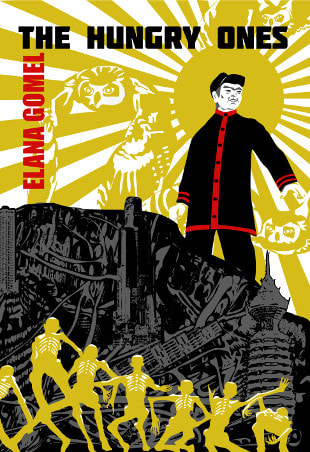
THE HUNGRY ONES by Elana Gomel
Welcome to the wild, surreal, brutal world of Elana Gomel’s living city and its myriad variety of inhabitants. The Hungry Ones is, if nothing else, ambitious in both scope and imagination. It is relentlessly strange. It is fast-paced and packed full of wonder, horror and surprise.
The nearest literary comparison to this novel I can think of is Clive Barker’s city of raw meat in his epic novel, Imagica. Gomel’s city has that same seething, nightmare feel. There are bird people and predatory, carnivorous trains. Every object and building in this seething metropolis is alive in some way, and not always benevolent.
The story begins when a woman wakes up in a hotel with no idea how she is or why she is there. She is quickly plunged into a chaotic nightmare as she endeavours to negotiate the monstrous organic chaos of the city and discovers survival skills that point to her being more than an ordinary citizen (if such a thing is possible in that place). Added to the unpredictability of the very streets beneath her feet, are hordes of zombie-like hungry ones, who have invaded the city and placed it on a war footing.
I admire the seemingly limitless expanse of creativity that feeds in the Elena Gomel’s world building and was swept along by the pacey narrative and endless invention of the first two thirds of the book. However, I lost that urgency as the novel moved through its last third. I struggled to engage and began to feel a little bogged down until the final drama unfolded. That was a great shame because I am in awe of the scope and inventiveness of this work. Perhaps the sheer weight of the city and its bizarre and terrifying denizens bore down a little too heavily on the story. I don’t know. It is hard to put my finger on why I found the last act difficult.
Don’t let my stumble put you off. The Hungry Ones is definitely worth the effort and is refreshing in its originality and daring. It will fill your head with a landscape worthy of Hieronymus Bosch, populated by characters every bit as strange as that artist’s most out-there creations. Just, don’t ride on any of the trains, while you’re there. Walk instead, it will be marginally safer.
THE HUNGRY ONES by Elana Gomel
Guardbridge Books
Buy it HERE
Welcome to the wild, surreal, brutal world of Elana Gomel’s living city and its myriad variety of inhabitants. The Hungry Ones is, if nothing else, ambitious in both scope and imagination. It is relentlessly strange. It is fast-paced and packed full of wonder, horror and surprise.
The nearest literary comparison to this novel I can think of is Clive Barker’s city of raw meat in his epic novel, Imagica. Gomel’s city has that same seething, nightmare feel. There are bird people and predatory, carnivorous trains. Every object and building in this seething metropolis is alive in some way, and not always benevolent.
The story begins when a woman wakes up in a hotel with no idea how she is or why she is there. She is quickly plunged into a chaotic nightmare as she endeavours to negotiate the monstrous organic chaos of the city and discovers survival skills that point to her being more than an ordinary citizen (if such a thing is possible in that place). Added to the unpredictability of the very streets beneath her feet, are hordes of zombie-like hungry ones, who have invaded the city and placed it on a war footing.
I admire the seemingly limitless expanse of creativity that feeds in the Elena Gomel’s world building and was swept along by the pacey narrative and endless invention of the first two thirds of the book. However, I lost that urgency as the novel moved through its last third. I struggled to engage and began to feel a little bogged down until the final drama unfolded. That was a great shame because I am in awe of the scope and inventiveness of this work. Perhaps the sheer weight of the city and its bizarre and terrifying denizens bore down a little too heavily on the story. I don’t know. It is hard to put my finger on why I found the last act difficult.
Don’t let my stumble put you off. The Hungry Ones is definitely worth the effort and is refreshing in its originality and daring. It will fill your head with a landscape worthy of Hieronymus Bosch, populated by characters every bit as strange as that artist’s most out-there creations. Just, don’t ride on any of the trains, while you’re there. Walk instead, it will be marginally safer.
THE HUNGRY ONES by Elana Gomel
Guardbridge Books
Buy it HERE
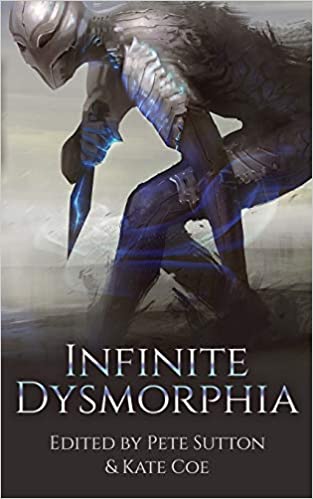
INFINITE DYSMORPHIA
Edited by Pete Sutton and Kate Coe
Dysmorphia, according to the NHS website, is a condition in which someone becomes obsessed over some aspect of their appearance or part of their body to the point that they may withdraw from society altogether.
Science has been developing ways in which to improve our bodies and their functioning for a long time. From the wooden leg and glass eye, through early wartime experiments in plastic surgery for burnt pilots, to organ, and even face, transplants. Nanotechnology is pushing medicine towards the microscopic and narrowing of the gap between human and man-made. For the injured and those who suffer conditions that drastically affect appearance and inhibit the pursuit of a normal life, body repair and enhancement are a welcome innovation. Technology is relentless, however. Always, there will be the next step. But where does justified interference end and the creation of the perfect human begin? Who are we to play God? Who are we to decide what is beautiful, or normal?
Infinite Dysmorphia is a superb anthology that explores these dangerous waters with verve, wit and in some cases great emotion. The stories here approach the dilemma from many different angles, but these are not simply tales of the new supermen and women. They analyse the morals, the ethics, the legal ramifications and, most of all, the effect of enhancement and alteration on the human soul.
The legal tangles that could arise from immortality are picked at in Save Me From Eternity by Alec McQuay, the closing story in the book. Not only is the media baying for blood, there is also the question of how the mind will cope with everlasting life. Facsimile by Courtney M Privett opens up the personal agonies of the clone and asks who that clone really is in relation to the “original”. A similar theme of identity, is taken up brilliantly in Point of Periphery by David Sarsfield, in which two versions of the same man are brought together by war and death and the resulting entanglement of their individual relationships.
Normal by Dolly Garland asks how far we go to be “normal” and the how that standard might suddenly shift when a woman’s quest for normality takes her a step further than anyone could have imagined. Society’s abhorrence and fear of the different is also looked at, albeit humorously, in Torches & Pitchforks For Sale by Sean Grigsby. A funny romp with a sharp point to make. It is slightly spoiled by a few Americanisms that crept into the speech patterns of the medieval-ish protagonists. “What in hell are you talking about?” for example. A small gripe. Otherwise, I enjoyed this yarn immensely.
My favourites? There are two. The opener, Secrets Of Flesh And Steel by Ren Warom, which is one of the most moving short stories I have ever read. Create synthetic people to carry out the dirty work no human would want (if there are even any humans left alive) in a world of routine and purpose and, eventually, one of them will discover something that isn’t logical or useful, but quite, beautiful. The other is Chipping Away by Frances Kay, a deft and tragic character study which reveals the effect of human enhancement has on a group of friends.
I’ve only mentioned a few of the excellent stories that make up this anthology. That does not belie the quality of all the work in these pages. Infinite Dysmorphia is a great book. It entertains, snags the imagination, but also has something to say.
INFINITE DYSMORPHIA Edited by Pete Sutton and Kate Coe
Krystell Ink
Buy it HERE
Edited by Pete Sutton and Kate Coe
Dysmorphia, according to the NHS website, is a condition in which someone becomes obsessed over some aspect of their appearance or part of their body to the point that they may withdraw from society altogether.
Science has been developing ways in which to improve our bodies and their functioning for a long time. From the wooden leg and glass eye, through early wartime experiments in plastic surgery for burnt pilots, to organ, and even face, transplants. Nanotechnology is pushing medicine towards the microscopic and narrowing of the gap between human and man-made. For the injured and those who suffer conditions that drastically affect appearance and inhibit the pursuit of a normal life, body repair and enhancement are a welcome innovation. Technology is relentless, however. Always, there will be the next step. But where does justified interference end and the creation of the perfect human begin? Who are we to play God? Who are we to decide what is beautiful, or normal?
Infinite Dysmorphia is a superb anthology that explores these dangerous waters with verve, wit and in some cases great emotion. The stories here approach the dilemma from many different angles, but these are not simply tales of the new supermen and women. They analyse the morals, the ethics, the legal ramifications and, most of all, the effect of enhancement and alteration on the human soul.
The legal tangles that could arise from immortality are picked at in Save Me From Eternity by Alec McQuay, the closing story in the book. Not only is the media baying for blood, there is also the question of how the mind will cope with everlasting life. Facsimile by Courtney M Privett opens up the personal agonies of the clone and asks who that clone really is in relation to the “original”. A similar theme of identity, is taken up brilliantly in Point of Periphery by David Sarsfield, in which two versions of the same man are brought together by war and death and the resulting entanglement of their individual relationships.
Normal by Dolly Garland asks how far we go to be “normal” and the how that standard might suddenly shift when a woman’s quest for normality takes her a step further than anyone could have imagined. Society’s abhorrence and fear of the different is also looked at, albeit humorously, in Torches & Pitchforks For Sale by Sean Grigsby. A funny romp with a sharp point to make. It is slightly spoiled by a few Americanisms that crept into the speech patterns of the medieval-ish protagonists. “What in hell are you talking about?” for example. A small gripe. Otherwise, I enjoyed this yarn immensely.
My favourites? There are two. The opener, Secrets Of Flesh And Steel by Ren Warom, which is one of the most moving short stories I have ever read. Create synthetic people to carry out the dirty work no human would want (if there are even any humans left alive) in a world of routine and purpose and, eventually, one of them will discover something that isn’t logical or useful, but quite, beautiful. The other is Chipping Away by Frances Kay, a deft and tragic character study which reveals the effect of human enhancement has on a group of friends.
I’ve only mentioned a few of the excellent stories that make up this anthology. That does not belie the quality of all the work in these pages. Infinite Dysmorphia is a great book. It entertains, snags the imagination, but also has something to say.
INFINITE DYSMORPHIA Edited by Pete Sutton and Kate Coe
Krystell Ink
Buy it HERE
FREQUENCIES OF EXISTENCE
by Andrew Hook
Andrew Hook is always an interesting, unpredictable writer who certainly ploughs his own furrow. His writing is delicate. It treads a subtle line between genres. It is filled with hints and clues. There are glimpses, and yet you can never be sure of what you’ve seen. Frequencies of Existence is a definite step in the evolution of Andrew Hook’s unique, ephemeral style.
None of the two dozen stories that make up this collection are particularly long, yet they draw you into episodes that feel as if they are part of something much greater than themselves. Episodes, yes, the best way to describe Frequencies Of Existence. Fragments from people’s lives. A moment. James Joyce described the stories that made up The Dubliners as describing a moment when everything changed for his characters. The description fits many of these tales, but there are others in which nothing changes. Tokyo in Rain, for example, a moody, claustrophobic slice of Japanese noir that has all the elements for good detective fiction, the rain drenched city, a series of unsolved murders, and a strange manifestation that might be clue or might not.
The Last Mohican is a clever moment from an alternative history in which punk really did change the world and looks at what a society holds dear. Softwood is a masterly piece of subtlety; a young woman who works for an unnamed organisation that may or may not be involved in espionage, finds herself locked away broadcasting mysterious sets for numbers at the same time each day. As her psychological state declines and she struggles with her own identity, the truth begins to dawn. The Day My Heart Stood Still could be an apocryphal story from Ray Bradbury’s Dandelion Wine collection, sun-drenched, child-like in its innocence and wrapped around a truly horrific truth.
I felt a strong resonance with Drowning in Air which begins with a sepia photograph of a wedding party wearing gas masks. At my own wedding in October 2020, bride and groom and the handful of guests were also forced to wear masks for the ceremony (the bride and groom were allowed to remove them for the vows). One day in the future, photographs for such wedding will take on their own surreal quality.
Frequencies of Existence is a snapshot of an author who is not bound by the conventions of story-telling yet manages to produce astonishing and compelling fiction. No beach read, it is nonetheless, a thing of beauty that requires more than a surface skim. The stories percolate long after the book is closed.
FREQUENCIES OF EXISTENCE by Andrew Hook
NewCon Press
Buy it HERE
by Andrew Hook
Andrew Hook is always an interesting, unpredictable writer who certainly ploughs his own furrow. His writing is delicate. It treads a subtle line between genres. It is filled with hints and clues. There are glimpses, and yet you can never be sure of what you’ve seen. Frequencies of Existence is a definite step in the evolution of Andrew Hook’s unique, ephemeral style.
None of the two dozen stories that make up this collection are particularly long, yet they draw you into episodes that feel as if they are part of something much greater than themselves. Episodes, yes, the best way to describe Frequencies Of Existence. Fragments from people’s lives. A moment. James Joyce described the stories that made up The Dubliners as describing a moment when everything changed for his characters. The description fits many of these tales, but there are others in which nothing changes. Tokyo in Rain, for example, a moody, claustrophobic slice of Japanese noir that has all the elements for good detective fiction, the rain drenched city, a series of unsolved murders, and a strange manifestation that might be clue or might not.
The Last Mohican is a clever moment from an alternative history in which punk really did change the world and looks at what a society holds dear. Softwood is a masterly piece of subtlety; a young woman who works for an unnamed organisation that may or may not be involved in espionage, finds herself locked away broadcasting mysterious sets for numbers at the same time each day. As her psychological state declines and she struggles with her own identity, the truth begins to dawn. The Day My Heart Stood Still could be an apocryphal story from Ray Bradbury’s Dandelion Wine collection, sun-drenched, child-like in its innocence and wrapped around a truly horrific truth.
I felt a strong resonance with Drowning in Air which begins with a sepia photograph of a wedding party wearing gas masks. At my own wedding in October 2020, bride and groom and the handful of guests were also forced to wear masks for the ceremony (the bride and groom were allowed to remove them for the vows). One day in the future, photographs for such wedding will take on their own surreal quality.
Frequencies of Existence is a snapshot of an author who is not bound by the conventions of story-telling yet manages to produce astonishing and compelling fiction. No beach read, it is nonetheless, a thing of beauty that requires more than a surface skim. The stories percolate long after the book is closed.
FREQUENCIES OF EXISTENCE by Andrew Hook
NewCon Press
Buy it HERE
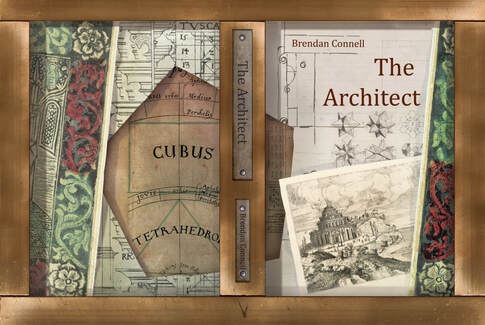
THE ARCHITECT by Brendan Connell
Brendan Connell’s short, razor-edged novel, The Architect, is the twenty-first century’s Animal Farm. There, I’ve said it and I stand by it. It is a fable, packed with vivid, visceral imagery that presents our personality-obsessed, hungry-for-ready-answers world into clear focus and presents us with a timely parable of a flimsy, ill-thought-out vanity-project teetering on the edge of cataclysmic destruction.
An organisation called The Universal Brotherhood of Mankind, started by Dr Maxwell Korn, a 19th Century mystic, is looking to build themselves a grand meeting house. Designs are considered and rejected and now they have turned, in desperation, to visionary – and controversial - architect, Alexius Nachtman who agrees to take on the project, but with the proviso that he has carte blanche in terms of cost and design.
As the building grows from its shaky foundations, it is by turns, beautiful, immense, intimidating, complex beyond human understanding and grotesque. Nachtman himself, indulging every architectural fantasy he has ever dreamed up, evolves quickly from drunken, dissolute contractor to messiah. The project, which started so well, begins to darken and turn bloody.
The Architect is a brutal and cleverly realised portrait of the charlatan raised to near godhood by followers blinded by their need of a charismatic leader. Such is their adoration they will follow their saviour to the bitter end and willingly shed their own blood for a man whose indolence and narcissism and contempt for them is plain to see. Yet, that very egotism and contempt is adored as part of his legend.
Connell’s prose thrums with energy and is driven by a relentless, poetic heartbeat. The characters may be larger than life, but they instantly recognisable and fully realised in brief but vivid brushstrokes. The book angered and thrilled me and ultimately left me feeling that I had devoured a work that is very special indeed and starkly relevant to these troubled and troubling times.
THE ARCHITECT by Brendan Connell
Eibonvale Press
Buy it HERE
Brendan Connell’s short, razor-edged novel, The Architect, is the twenty-first century’s Animal Farm. There, I’ve said it and I stand by it. It is a fable, packed with vivid, visceral imagery that presents our personality-obsessed, hungry-for-ready-answers world into clear focus and presents us with a timely parable of a flimsy, ill-thought-out vanity-project teetering on the edge of cataclysmic destruction.
An organisation called The Universal Brotherhood of Mankind, started by Dr Maxwell Korn, a 19th Century mystic, is looking to build themselves a grand meeting house. Designs are considered and rejected and now they have turned, in desperation, to visionary – and controversial - architect, Alexius Nachtman who agrees to take on the project, but with the proviso that he has carte blanche in terms of cost and design.
As the building grows from its shaky foundations, it is by turns, beautiful, immense, intimidating, complex beyond human understanding and grotesque. Nachtman himself, indulging every architectural fantasy he has ever dreamed up, evolves quickly from drunken, dissolute contractor to messiah. The project, which started so well, begins to darken and turn bloody.
The Architect is a brutal and cleverly realised portrait of the charlatan raised to near godhood by followers blinded by their need of a charismatic leader. Such is their adoration they will follow their saviour to the bitter end and willingly shed their own blood for a man whose indolence and narcissism and contempt for them is plain to see. Yet, that very egotism and contempt is adored as part of his legend.
Connell’s prose thrums with energy and is driven by a relentless, poetic heartbeat. The characters may be larger than life, but they instantly recognisable and fully realised in brief but vivid brushstrokes. The book angered and thrilled me and ultimately left me feeling that I had devoured a work that is very special indeed and starkly relevant to these troubled and troubling times.
THE ARCHITECT by Brendan Connell
Eibonvale Press
Buy it HERE
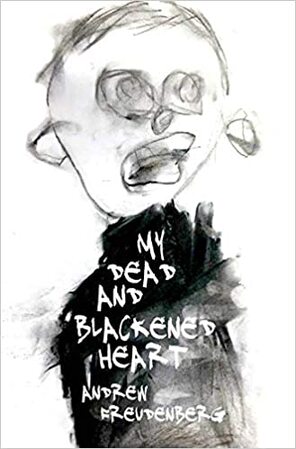
MY DEAD AND BLACKENED HEART by Andrew Freudenberg
Andrew Freudenberg’s My Dead and Blackened Heart is a collection of horror stories. There is no doubt about that. Freudenberg makes no excuses for his tales of the macabre. Instead he carves his way right through the middle of the genre and take no prisoners.
Don’t get me wrong, these are good stories. Well-written and original. They have heart, as well, even the two set on the most horrible farm you could ever imagine. Freudenberg isn’t afraid to get his hands all bloody and he isn’t afraid to tear off the lid and take a good look at what is inside either. Milkshake and Meat Sweet are excellent, not nice and very nasty, but powerful for all that.
A Bitter Parliament will guarantee you never look at, or trust, owls the same way again, The Last Patrol is a brutal and fast moving tale of modern gladiatorial combat. The real life horror of the Blitz provides the backdrop for Hope Eternal. These are just some of the wicked delights in My Dead and Blackened Heart, all well-crafted, straightforward and immensely readable.
There are two contenders for my favourites in this collection. One is The Cardiac Ordeal, a heart-wrenching story of a man faced with a decision so terrible, there can never be a good outcome and Pater In Tenebris, a post-apocalyptic drama, in which a father strives to protect his family in the face of inevitable destruction. Interestingly, both these stories depict desperate fathers faced with impossible decisions. Andrew Freudenberg has found a real connection to my own psyche with these stories and they are indicative of the humanity at the core of this book.
Before I leave, I would like to comment on the cover art. A human figure drawn by the author’s son. It is typically childish in its depiction. Wrong yet instantly recognisable as a man. At the same time it is unnerving. It felt to me as if it was a depiction of the author’s soul. His raw essence torn out and recreated in a few black lines. Great book, great cover, well worth a read. Highly recommended.
MY DEAD AND BLACKENED HEART by Andrew Freudenberg
The Sinister Horror Company
Buy it HERE
Andrew Freudenberg’s My Dead and Blackened Heart is a collection of horror stories. There is no doubt about that. Freudenberg makes no excuses for his tales of the macabre. Instead he carves his way right through the middle of the genre and take no prisoners.
Don’t get me wrong, these are good stories. Well-written and original. They have heart, as well, even the two set on the most horrible farm you could ever imagine. Freudenberg isn’t afraid to get his hands all bloody and he isn’t afraid to tear off the lid and take a good look at what is inside either. Milkshake and Meat Sweet are excellent, not nice and very nasty, but powerful for all that.
A Bitter Parliament will guarantee you never look at, or trust, owls the same way again, The Last Patrol is a brutal and fast moving tale of modern gladiatorial combat. The real life horror of the Blitz provides the backdrop for Hope Eternal. These are just some of the wicked delights in My Dead and Blackened Heart, all well-crafted, straightforward and immensely readable.
There are two contenders for my favourites in this collection. One is The Cardiac Ordeal, a heart-wrenching story of a man faced with a decision so terrible, there can never be a good outcome and Pater In Tenebris, a post-apocalyptic drama, in which a father strives to protect his family in the face of inevitable destruction. Interestingly, both these stories depict desperate fathers faced with impossible decisions. Andrew Freudenberg has found a real connection to my own psyche with these stories and they are indicative of the humanity at the core of this book.
Before I leave, I would like to comment on the cover art. A human figure drawn by the author’s son. It is typically childish in its depiction. Wrong yet instantly recognisable as a man. At the same time it is unnerving. It felt to me as if it was a depiction of the author’s soul. His raw essence torn out and recreated in a few black lines. Great book, great cover, well worth a read. Highly recommended.
MY DEAD AND BLACKENED HEART by Andrew Freudenberg
The Sinister Horror Company
Buy it HERE
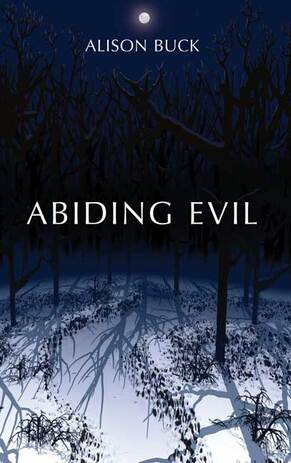
ABIDING EVIL by Alison Buck
Abiding Evil is a compelling page-turner. Alison Buck’s novel turns the screw, ramps up the tension at a perfect pace. There is the disparate group of friends and acquaintances she has gathered for a reunion weekend at a remote hotel. They are snowed in. Communications are cut. The fight is on, both for their own lives and the lives of their children. Added to this, the fault-lines that already web the relationships between these people are prised further and further apart and the reader is drawn, heart and soul, into their spiralling panic.
I enjoyed Abiding Evil. It swept me along with its pacey narrative. The protagonists are well-drawn and slip realistically from flawed, unlikable and frightened to heroic and vice versa as the crisis at the heart of the book is ignited and steadily grows an inferno of fear and desperation. I just have a couple of reservations. Firstly, this was a novel that did not need a supernatural element. The forest, so vividly brought to life by the author, was a menacing, lethal place, made even more terrifying by the solid winter darkness that closes in on the hapless group. The peril was, I feel, weakened by the story’s supernatural essence. Sometimes nature and the darkest reaches of the human psyche are frightening enough.
My second reservation, more of an irritation really, was the uncredited statement in the back-cover blurb, to the effect that the author brought a "fresh perspective" to horror fiction. I know this is just back-cover hyperbole and we all like to indulge in this kind of build-up to our writing. I know that I should not have let it bother me, but I found Abiding Evil to be the very opposite of horror with an original element. It is a solid, well-written horror-thriller. It does its job and it does it well. It does not, however, add anything new to the genre. There is an army of writers (far too many to mention without leaving good people out of the list) who take the reader to the outer regions of the fantastical, who explore the hinterlands between genres. Take a look at Black Static magazine. Delve into the small press. Dive into the slipstream. It is there that you will find the original in spades. These are the writers who had gone out on a precarious limb and brought a new element to horror, who changed it and are changing it. Okay, I know that it was a harmless statement on the back of a paperback, intended to sell the book and as such, it is fine, but it galled me all the same.
Please don’t let my comments put you off. If you are in the market for an exciting, edge-of the seat ride, this is the perfect novel with much to recommend it. If you enjoyed your stay at the Overlook hotel, or love to take a trip into fear with the decent folk who populate the novels of Dean Koontz, Abiding Evil is the book for you.
ABIDING EVIL by Alison Buck
Alnpete Press
Buy it HERE
Abiding Evil is a compelling page-turner. Alison Buck’s novel turns the screw, ramps up the tension at a perfect pace. There is the disparate group of friends and acquaintances she has gathered for a reunion weekend at a remote hotel. They are snowed in. Communications are cut. The fight is on, both for their own lives and the lives of their children. Added to this, the fault-lines that already web the relationships between these people are prised further and further apart and the reader is drawn, heart and soul, into their spiralling panic.
I enjoyed Abiding Evil. It swept me along with its pacey narrative. The protagonists are well-drawn and slip realistically from flawed, unlikable and frightened to heroic and vice versa as the crisis at the heart of the book is ignited and steadily grows an inferno of fear and desperation. I just have a couple of reservations. Firstly, this was a novel that did not need a supernatural element. The forest, so vividly brought to life by the author, was a menacing, lethal place, made even more terrifying by the solid winter darkness that closes in on the hapless group. The peril was, I feel, weakened by the story’s supernatural essence. Sometimes nature and the darkest reaches of the human psyche are frightening enough.
My second reservation, more of an irritation really, was the uncredited statement in the back-cover blurb, to the effect that the author brought a "fresh perspective" to horror fiction. I know this is just back-cover hyperbole and we all like to indulge in this kind of build-up to our writing. I know that I should not have let it bother me, but I found Abiding Evil to be the very opposite of horror with an original element. It is a solid, well-written horror-thriller. It does its job and it does it well. It does not, however, add anything new to the genre. There is an army of writers (far too many to mention without leaving good people out of the list) who take the reader to the outer regions of the fantastical, who explore the hinterlands between genres. Take a look at Black Static magazine. Delve into the small press. Dive into the slipstream. It is there that you will find the original in spades. These are the writers who had gone out on a precarious limb and brought a new element to horror, who changed it and are changing it. Okay, I know that it was a harmless statement on the back of a paperback, intended to sell the book and as such, it is fine, but it galled me all the same.
Please don’t let my comments put you off. If you are in the market for an exciting, edge-of the seat ride, this is the perfect novel with much to recommend it. If you enjoyed your stay at the Overlook hotel, or love to take a trip into fear with the decent folk who populate the novels of Dean Koontz, Abiding Evil is the book for you.
ABIDING EVIL by Alison Buck
Alnpete Press
Buy it HERE
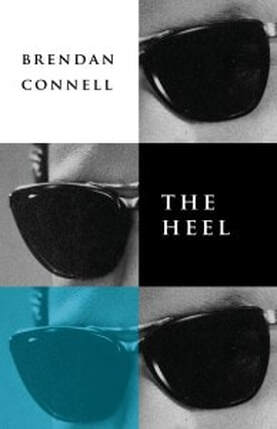
THE HEEL by Brendan Connell
1974, the summer is hot, the town of Santa Fe is dry, dusty and shimmering in the heat haze. Mitch is a salesman, foisting fake native American artefacts onto the gullible but not making much of a living out of it. He may be an engaging character, but he is far from a good man. He is, in fact, The Heel of the title. Mitch is a womaniser, he is a con man, an alcoholic and he is on the make.
Then he receives a visitor he doesn’t want and an offer he cannot refuse.
The Heel is noir in every sense. Okay, a lot of it takes place in the harsh glare of the New Mexico sun and there are precious few rainy days in this city (only one, in fact), but there is a femme fatale, there is a chancer who finds himself out of his depth and there are prowling police cars and people who cannot be trusted, so what else do you need?
There is also pitch-perfect sense of place and of period. I know, I may not have lived in New Mexico at that time, but I was 17 in 1974, so the dreadful clothes, the sexism, the awful diet and complete disregard for personal health are as vivid and real in the pages of The Heel as they were when I laced up my first platform shoe and knotted my mile-wide kipper tie over my lurid flower-patterned shirt.
There is, however, another layer to this book. Something resembling a parallel universe visited every now and then and seemingly at odds with Mitch’s story. However, the two strands slowly converge until the under-layer begins to bleed into the surface. A clever conceit, in which the raw emotion and drive of the main protagonists is the visceral engine of that other world.
Fast-paced, compelling, full of wisecracks and fast talking, The Heel is a thoroughly entertaining read that wrenches you through a set of high-gee twists and turns and ends with the bleakest sentence I’ve read since that last, awful moment in Graham Greene’s Brighton Rock. The narrative, at moments of high stress and drama, breaks into short passages of unpunctuated stream-of-consciousness. I must admit, that threw me at first, but I soon got the hang of it.
My advice, hitch a ride with Mitch, treat him to a six-pack of Falstaff, a bottle of Pinch and twenty Benson & Hedges then let him take you where he will. Just don’t buy anything from him.
THE HEEL by Brendan Connell
Snuggly Books
Buy it HERE
1974, the summer is hot, the town of Santa Fe is dry, dusty and shimmering in the heat haze. Mitch is a salesman, foisting fake native American artefacts onto the gullible but not making much of a living out of it. He may be an engaging character, but he is far from a good man. He is, in fact, The Heel of the title. Mitch is a womaniser, he is a con man, an alcoholic and he is on the make.
Then he receives a visitor he doesn’t want and an offer he cannot refuse.
The Heel is noir in every sense. Okay, a lot of it takes place in the harsh glare of the New Mexico sun and there are precious few rainy days in this city (only one, in fact), but there is a femme fatale, there is a chancer who finds himself out of his depth and there are prowling police cars and people who cannot be trusted, so what else do you need?
There is also pitch-perfect sense of place and of period. I know, I may not have lived in New Mexico at that time, but I was 17 in 1974, so the dreadful clothes, the sexism, the awful diet and complete disregard for personal health are as vivid and real in the pages of The Heel as they were when I laced up my first platform shoe and knotted my mile-wide kipper tie over my lurid flower-patterned shirt.
There is, however, another layer to this book. Something resembling a parallel universe visited every now and then and seemingly at odds with Mitch’s story. However, the two strands slowly converge until the under-layer begins to bleed into the surface. A clever conceit, in which the raw emotion and drive of the main protagonists is the visceral engine of that other world.
Fast-paced, compelling, full of wisecracks and fast talking, The Heel is a thoroughly entertaining read that wrenches you through a set of high-gee twists and turns and ends with the bleakest sentence I’ve read since that last, awful moment in Graham Greene’s Brighton Rock. The narrative, at moments of high stress and drama, breaks into short passages of unpunctuated stream-of-consciousness. I must admit, that threw me at first, but I soon got the hang of it.
My advice, hitch a ride with Mitch, treat him to a six-pack of Falstaff, a bottle of Pinch and twenty Benson & Hedges then let him take you where he will. Just don’t buy anything from him.
THE HEEL by Brendan Connell
Snuggly Books
Buy it HERE
|
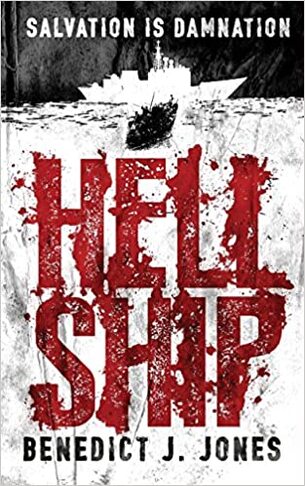
HELL SHIP by Benedict J. Jones
War was once described by Harry Patch, the last surviving World War One Tommy, as legalised murder. Surely, pitching your own young men against those of another nation for some political or material gain, is a truly obscene act. Modern warfare is industrial-scale butchery achieved by bullets and bombs. The eviscerating effect of shrapnel and the horror of fire are the unthinkable tools of conflict, authorised and unleashed by governments in order to achieve victory. But amid the global catastrophe that is war, there are countless other, smaller, nightmares being enacted, localised atrocities committed by one set of human beings upon another. And that is how Benedict J. Jones’s novella Hell Ship begins. That opening scene is based on similar massacres carried out by the Imperial Japanese Army during the second world war. In this case, however, the slaughter is not down to simple expediency or the bloodlust of some war-maddened, fanatical officer. This time the survival of a nation is at the stake and if the answer can’t be found in this world, it may be found in some other, even darker place. During the real conflict, the supernatural may not have been an option, but human sacrifice certainly was. Hell Ship is a fast paced, blood-drenched tale that works on two levels. There is the compelling, action-packed narrative that tells the story of a band of ill-assorted survivors of a torpedoed merchant ship who are fighting for their lives on the cruel, open sea and think they have found a place of refuge on a seemingly deserted warship. The ship, however, is far from empty. Something lurks in the desolated, shadowed corners and hold of the vessel and it is far from human. Benedict J. Jones has drawn together a convincing cast of characters and perfectly choreographed this short, sharp novella - which I devoured in two sittings. Jones is a master of escalating tension and action scenes. He is able to build relationships between reader and character in a short time which gives the tension that extra emotional punch. On another level, Hell Ship is a vivid microcosm of the war itself. The savagery unleashed focused onto this small band of people who are fighting something they barely understand but know has to be destroyed. Their enemy is monstrous and mindless, just as the enemies of the Allies were monstrous and mindless. The hideous beast that was the Japanese Empire and the demonic fury of Nazi Germany might have been, at their core, mere political machines, but they were forged from instincts and hungers spawned at the fragile borderland between the human and the bestial. HELL SHIP by Benedict J. Jones Sinister Horror Company Buy it HERE |
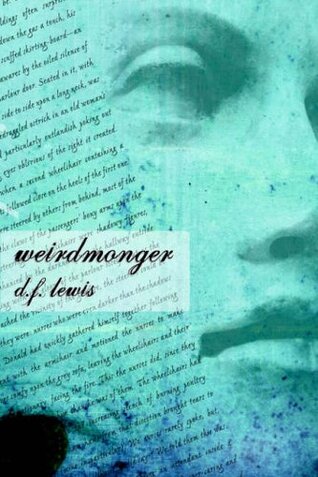
WEIRDMONGER by D. F. Lewis
You can use words such as indefinable, impenetrable, funny, dark and surreal when attempting to describe the writing of that National Treasure, D. F. Lewis. All are accurate, but none of them able to do more than scratch the surface. He is a one-off, an author who ploughs his own furrow and never compromises in his work. Weirdmonger is the perfect showcase for this eccentric talent. It is a rich treasure trove of the strange and disturbing and a handbook for what has become known as weird fiction.
How do you summarise these stories? The first word that springs to mind is dreamlike. Yes, I know, it is an overused term, but in this case, it is more than mere cliché. In many a Weirdmonger tale you will be drawn into the life and adventures of a recognisable, often endearing character. Perhaps they are on an innocent on an ordinary holiday by the seaside, or visiting a relative, perhaps they are some eccentric engaged in a bizarre profession. So far, so good, but it isn’t long before the weirdness seeps in from the edge of the page. Odd characters appear, there are sudden changes in point-of-view and in some of the longer pieces, a relay race in which that point-of-view is passed from character-to-character with disconcerting frequency. Time itself, may cease to have any meaning. That’s the kind of thing that certainly happens in my dreams. One moment I am a participant in the story and then, suddenly, I am an observer. The dream is about one thing then abruptly, the story changes.
Nostalgia, is another word that leaps out of the pages of Weirdmonger. The language, the settings the characters and the rhythms of speech, the prose-style itself, all evoke a Britain of my childhood. They are shaded with the washed-out colours of the 1950s and early 60s. It comes through strongly in the dialogue. I often heard my aunts and uncles and grandparents using similar rhythms of speech to those in the cast of Weirdmonger. Thankfully, they were not like the aunts and uncles in this book.
The prose-style is a delight. It is filled with startling metaphors and similes and alarming jumps of logic that leave you floundering, but also beaming with the kind of satisfaction only great writing can give you. It is comic, funny, clever one moment, bewildering and frightening the next.
D. F. Lewis can conjure an alarming monster or two, as well. Horrible, tentacled things that lurk in shadow or, worse, peer out from behind the human mask. There is a sense of threat. Sometimes revealed. At other times it remains, to the end, unresolved, an unsettling miasma that hangs over the story. D. F. Lewis’s world is often cosy, but that cosiness is an illusion. It is a veneer that barely holds back a seething sub-universe of horror and madness.
Weird fiction is a term often bandied about, but in my opinion, no one can really say that they have tasted it until they have read both the Gormenghast trilogy and the work of D. F. Lewis. Don’t pick up Weirdmonger expecting conventional three-act narrative structure. Read it for the ride it gives you. For a trip on a creaking old ghost train in a seedy, ancient and rusting fairground accompanied by people you think you know but who will turn out to be anything but. Read it for the sheer joy of indulging yourself in D. F. Lewis’s beautiful mad prose, the eccentric dialogue, the darkness, the unsettling nightmare-like wrongness of it all. Be warned, it is a rich meal. One that I found easier to digest in small, one-story doses. It was a long, slow trip, but one I savoured and will remember for a long time.
WEIRDMONGER by D. F. Lewis
Prime
Buy it HERE
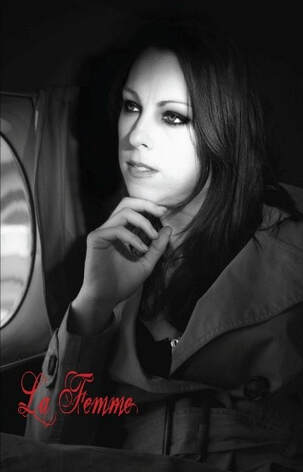
LA FEMME Edited by Ian Whates
“She walked into my office like a cat with the body of an angel. I knew she was trouble from the moment I laid eyes on her, but there wasn’t much I could do about that. If she was the bait, then I was hooked and just waiting to be reeled in…”
So starts many an ancient pulp crime noir and their countless parodies, usually a lot more eloquently than my feeble effort. The femme fatale. Beautiful, dangerous and irresistible. She is the honey trap, the damsel in distress who refuses to admit it, the woman who makes fool out of even the most cynical and battle-hardened private eye. However, as large as she looms in the pages, and on the silver screens, of noir, she is always the support, the co-star, never the star.
Until now. La Femme, edited by the irrepressible Ian Whates, finally gives the femme fatale the star billing she deserves. Not only that, it also shows her in all her incarnations, always strong, always fascinating and always more than a match for her male colleagues and adversaries. Much like real life, in fact.
The opener, Palestinian Sweets by Stephen Palmer is a complex and, for me, puzzling story that revolves around negotiation carried out not by word but by subtleties of taste and smell as the protagonists meet over a series of artfully selected meals. A clever conceit that is as delicately written as the negotiations themselves. I also found the closer, Elision by Benjanun Sriduangkaew in which a Song has replaced warfare, something of a challenge. I’m not sure if it was the writing style or the narrative. There is definitely a beauty in the story’s language and layers and depth to the plot. This is one I will return to because it certainly bears a re-read. Two rich meals indeed, the hors devours and dessert for several courses of tasty yarns.
Among them is Storm Constantine’s Winter Bewitchment, which takes us to an undefined mythical city and a Dangerous Liaisons style romantic campaign mounted by an aristocrat and her Lady’s Companion. The world building is clever in that enough is given for the reader to create their own mental landscape in which the tale unfolds. Andrew Hook shuts us into an isolated and enigmatic establishment called Softwood where a woman grapples with a mysterious task that is not quite what it seems. An intense and claustrophobic journey into the human psyche and the nature of identity. The Girl With No Face is a deliciously vicious contribution by John Llewellyn Probert in which a criminal on the run locks horns with a surgeon. Adele Kirby’s Soleil is an entertaining, sharply written science fiction which pitches two extraordinary characters into a deadly duel.
Slink Thinking by Frances Hardinge is one of the standout stories for me, not only told from the point of view of animals but a ghost story to boot. The other is Trysting Antlers by Holly Ice, a startlingly original study of maleness and the cut-and-thrust of the mating game.
La Femme is an enjoyable, thought-provoking anthology that, in the great tradition of fantastical fiction, takes a well-worn trope and turns it not only on its head, but inside out and back-to-front. What I loved most about the book was the many interpretations of the femme fatale the authors managed to deliver. Sometimes she is immediately powerful, heroic and dangerous, sometimes the she is hidden, her strength, courage and resourcefulness - and ruthlessness - revealed only when the going gets very tough indeed.
LA FEMME edited by Ian Whates
Newcon Press
Buy it HERE
“She walked into my office like a cat with the body of an angel. I knew she was trouble from the moment I laid eyes on her, but there wasn’t much I could do about that. If she was the bait, then I was hooked and just waiting to be reeled in…”
So starts many an ancient pulp crime noir and their countless parodies, usually a lot more eloquently than my feeble effort. The femme fatale. Beautiful, dangerous and irresistible. She is the honey trap, the damsel in distress who refuses to admit it, the woman who makes fool out of even the most cynical and battle-hardened private eye. However, as large as she looms in the pages, and on the silver screens, of noir, she is always the support, the co-star, never the star.
Until now. La Femme, edited by the irrepressible Ian Whates, finally gives the femme fatale the star billing she deserves. Not only that, it also shows her in all her incarnations, always strong, always fascinating and always more than a match for her male colleagues and adversaries. Much like real life, in fact.
The opener, Palestinian Sweets by Stephen Palmer is a complex and, for me, puzzling story that revolves around negotiation carried out not by word but by subtleties of taste and smell as the protagonists meet over a series of artfully selected meals. A clever conceit that is as delicately written as the negotiations themselves. I also found the closer, Elision by Benjanun Sriduangkaew in which a Song has replaced warfare, something of a challenge. I’m not sure if it was the writing style or the narrative. There is definitely a beauty in the story’s language and layers and depth to the plot. This is one I will return to because it certainly bears a re-read. Two rich meals indeed, the hors devours and dessert for several courses of tasty yarns.
Among them is Storm Constantine’s Winter Bewitchment, which takes us to an undefined mythical city and a Dangerous Liaisons style romantic campaign mounted by an aristocrat and her Lady’s Companion. The world building is clever in that enough is given for the reader to create their own mental landscape in which the tale unfolds. Andrew Hook shuts us into an isolated and enigmatic establishment called Softwood where a woman grapples with a mysterious task that is not quite what it seems. An intense and claustrophobic journey into the human psyche and the nature of identity. The Girl With No Face is a deliciously vicious contribution by John Llewellyn Probert in which a criminal on the run locks horns with a surgeon. Adele Kirby’s Soleil is an entertaining, sharply written science fiction which pitches two extraordinary characters into a deadly duel.
Slink Thinking by Frances Hardinge is one of the standout stories for me, not only told from the point of view of animals but a ghost story to boot. The other is Trysting Antlers by Holly Ice, a startlingly original study of maleness and the cut-and-thrust of the mating game.
La Femme is an enjoyable, thought-provoking anthology that, in the great tradition of fantastical fiction, takes a well-worn trope and turns it not only on its head, but inside out and back-to-front. What I loved most about the book was the many interpretations of the femme fatale the authors managed to deliver. Sometimes she is immediately powerful, heroic and dangerous, sometimes the she is hidden, her strength, courage and resourcefulness - and ruthlessness - revealed only when the going gets very tough indeed.
LA FEMME edited by Ian Whates
Newcon Press
Buy it HERE
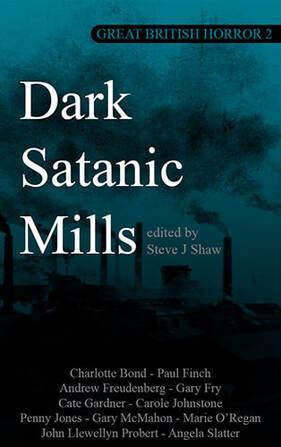
GREAT BRITISH HORROR 2: DARK SATANIC MILLS Edited by Steve J Shaw
Black Shuck Books’ Great British Horror series arrived to well-deserved acclaim with Green and Pleasant Land and now, in this second volume, moves from the countryside to the towns and cities of our sceptred isle. A cast of leading British horror writers, plus a guest from outside our borders ensure that Dark Satanic Mills is a worthy successor to the Book One.
There is a quality to these stories that is hard to define. It is in the writing, the tight plotting, the way that the outcomes are always logical and satisfying, yet at the same time, often left to the reader’s imagination. Less is more as they say, and these stories are more powerful because of it. Paul Finch’s opener, Tools of the Trade, is fine example of is-it-isn’t-it? horror. How much is imagination, how much the supernatural? Its ending is stark and very troubling indeed. Andrew Freudenberg gives us one of the anthology’s stand-out (for me) stories with The Cardiac Ordeal, an ever-tightening spiral of desperation and desperate acts and terrible dénouement. Sleeping Black by Marie O’Regan adds a touch of pathos with this genuinely moving ghost story. Our Lady of Wicker Bridge by Angela Slatter takes is a vivid trip into the harsh and difficult world of the social worker. John Llewellyn Probert lightens things up, if lightens is the right word, with the mischievous and gruesome The Church With the Bleeding Windows in which something ancient and horrible is inadvertently woken to wreak bloody havoc within the hallowed walls of a church. One of my favourites, there was something gleeful about this yarn which entertains and horrifies in equal measure.
For me, the absolute highest point of this already excellent anthology, is Carole Johnstone’s story (unfortunately the symbols used in the title are not available to me here). This is an atmospheric, gritty, brutal crime story of murder and linguistics, featuring the gutsiest detective I’ve so far encountered in fiction. I want to see this character again!
Dark Satanic Mills is a quality anthology with not a weak story between its covers. At the time of writing there are two further volumes available and, on its current trajectory, Great British Horror deserves a place in Horror’s Hall of Fame (or should that be Infamy) along with the Terror Tales, Black Books of Horror, and the classic Pan and the Fontana series.
GREAT BRITSH HORROR 2: DARK SATANIC MILLS edited by Steve J Shaw
Black Shuck Books
Buy it HERE
Black Shuck Books’ Great British Horror series arrived to well-deserved acclaim with Green and Pleasant Land and now, in this second volume, moves from the countryside to the towns and cities of our sceptred isle. A cast of leading British horror writers, plus a guest from outside our borders ensure that Dark Satanic Mills is a worthy successor to the Book One.
There is a quality to these stories that is hard to define. It is in the writing, the tight plotting, the way that the outcomes are always logical and satisfying, yet at the same time, often left to the reader’s imagination. Less is more as they say, and these stories are more powerful because of it. Paul Finch’s opener, Tools of the Trade, is fine example of is-it-isn’t-it? horror. How much is imagination, how much the supernatural? Its ending is stark and very troubling indeed. Andrew Freudenberg gives us one of the anthology’s stand-out (for me) stories with The Cardiac Ordeal, an ever-tightening spiral of desperation and desperate acts and terrible dénouement. Sleeping Black by Marie O’Regan adds a touch of pathos with this genuinely moving ghost story. Our Lady of Wicker Bridge by Angela Slatter takes is a vivid trip into the harsh and difficult world of the social worker. John Llewellyn Probert lightens things up, if lightens is the right word, with the mischievous and gruesome The Church With the Bleeding Windows in which something ancient and horrible is inadvertently woken to wreak bloody havoc within the hallowed walls of a church. One of my favourites, there was something gleeful about this yarn which entertains and horrifies in equal measure.
For me, the absolute highest point of this already excellent anthology, is Carole Johnstone’s story (unfortunately the symbols used in the title are not available to me here). This is an atmospheric, gritty, brutal crime story of murder and linguistics, featuring the gutsiest detective I’ve so far encountered in fiction. I want to see this character again!
Dark Satanic Mills is a quality anthology with not a weak story between its covers. At the time of writing there are two further volumes available and, on its current trajectory, Great British Horror deserves a place in Horror’s Hall of Fame (or should that be Infamy) along with the Terror Tales, Black Books of Horror, and the classic Pan and the Fontana series.
GREAT BRITSH HORROR 2: DARK SATANIC MILLS edited by Steve J Shaw
Black Shuck Books
Buy it HERE
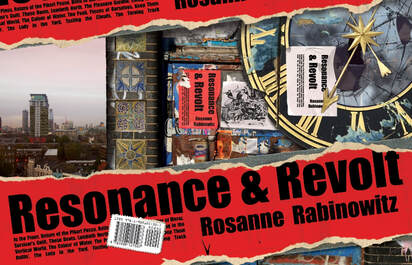
RESONANCE & REVOLT by Rosanne Rabinowitz
When reading this collection, there is a sense that you are communing with the outsider, the unconventional. The rebel. Those who do not fit in with the ordinary and conventional, but who are not content to hide in the shadows. These outsiders make their presence felt. They are irritants in the bland and generic. They are, well, revolutionaries, just as the title suggests.
Resonance & Revolt is a major collection from someone whose name has featured in the tables of contents of countless magazines and anthologies. Rosanne Rabinowitz’s stories are not easy reading. They are many-layered and complex. They hint at the weird, but seldom unwrap it fully for your examination. Her characters are strong and well-developed. Her settings range from a London she obviously knows well and which appears to be part of her psyche, to Eastern Europe. Her settings are the present day, the tumultuous underbelly of the 1980s and the past. In some cases the borders between these eras are blurred as one bleeds into the other.
The first two stories in Resonance & Revolt are examples just that temporal haemorrhage. In The Pines is a long work that draws such a circle through its 19th Century through to the present day and then back again. Set in the Czech Republic, Return of the Pikart Posse opens the fragile barrier between then and now via a touching encounter and burgeoning relationship between its protagonist and a stranger she encounters while researching the Pikarts of the title. London, protest and the 1980s are either the setting or the formative backdrop for The Pleasure Garden, Lambeth North and The Peak, to name but three. The London of these stories, is the real capital, grimy, gritty, alive and vibrant with all manner of energies. It is the London of squats and bedsitters, wild parties and protest. The stories provoke an odd nostalgia, far from rose-coloured, it is rather an evocation of unrest, anger and action. Rosanne Rabinowitz visits her Jewish roots with an entertaining story of Jews and aliens on The Matter of Meroz, in which a group of beleaguered and persecuted Jews turn to extra-terrestrials for assistance, although it does not turn out quite how they had hoped.
My own favourites in the collection are Pieces of Ourselves, in which is an epic meld of London, protest and the downright strange, and The Turning Track, an unsettling fantasy involving a mysterious train and the people waiting for its arrival at a remote station.
Filled with subtlety and nuance, its narratives alive with passion, anger mingled with sympathy, empathy and gentleness, Resonance & Revolt is an intense read, sometimes difficult and ambiguous, sometimes funny and melancholy, but always rewarding.
And let's not forge that sublime Eibonvale cover art, courtesy of David Rix
RESONANCE & REVOLT by Rosanne Rabinowitz
Eibonvale Publishing
Buy it HERE
When reading this collection, there is a sense that you are communing with the outsider, the unconventional. The rebel. Those who do not fit in with the ordinary and conventional, but who are not content to hide in the shadows. These outsiders make their presence felt. They are irritants in the bland and generic. They are, well, revolutionaries, just as the title suggests.
Resonance & Revolt is a major collection from someone whose name has featured in the tables of contents of countless magazines and anthologies. Rosanne Rabinowitz’s stories are not easy reading. They are many-layered and complex. They hint at the weird, but seldom unwrap it fully for your examination. Her characters are strong and well-developed. Her settings range from a London she obviously knows well and which appears to be part of her psyche, to Eastern Europe. Her settings are the present day, the tumultuous underbelly of the 1980s and the past. In some cases the borders between these eras are blurred as one bleeds into the other.
The first two stories in Resonance & Revolt are examples just that temporal haemorrhage. In The Pines is a long work that draws such a circle through its 19th Century through to the present day and then back again. Set in the Czech Republic, Return of the Pikart Posse opens the fragile barrier between then and now via a touching encounter and burgeoning relationship between its protagonist and a stranger she encounters while researching the Pikarts of the title. London, protest and the 1980s are either the setting or the formative backdrop for The Pleasure Garden, Lambeth North and The Peak, to name but three. The London of these stories, is the real capital, grimy, gritty, alive and vibrant with all manner of energies. It is the London of squats and bedsitters, wild parties and protest. The stories provoke an odd nostalgia, far from rose-coloured, it is rather an evocation of unrest, anger and action. Rosanne Rabinowitz visits her Jewish roots with an entertaining story of Jews and aliens on The Matter of Meroz, in which a group of beleaguered and persecuted Jews turn to extra-terrestrials for assistance, although it does not turn out quite how they had hoped.
My own favourites in the collection are Pieces of Ourselves, in which is an epic meld of London, protest and the downright strange, and The Turning Track, an unsettling fantasy involving a mysterious train and the people waiting for its arrival at a remote station.
Filled with subtlety and nuance, its narratives alive with passion, anger mingled with sympathy, empathy and gentleness, Resonance & Revolt is an intense read, sometimes difficult and ambiguous, sometimes funny and melancholy, but always rewarding.
And let's not forge that sublime Eibonvale cover art, courtesy of David Rix
RESONANCE & REVOLT by Rosanne Rabinowitz
Eibonvale Publishing
Buy it HERE
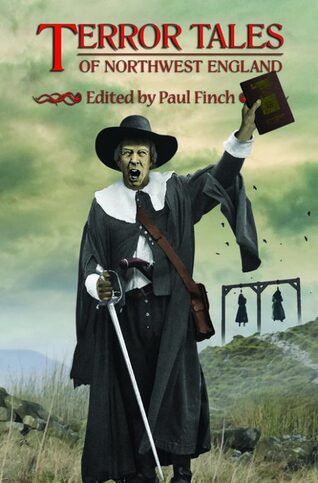
TERROR TALES OF NORTHWEST ENGLAND Edited by Paul Finch
This latest in the long-running Terror Tales anthology series takes us up and across to the sprawling metropolis of Greater Manchester, the mean streets of Liverpool and out into the wild moors of the northwest. You know where you are with these books (excuse the pun). These are horror stories. They are meant to shock and scare the reader. There is a familiarity about this book that feels like a night in chatting with on old friend. Yet, weaved in and around the familiar and, yes, comfortable, landscapes of terror and there are streams of ambiguity and strangeness that beguile and bemuse the reader. Strangeness like Cate Gardner’s The Mute Swan, in which a young girl is drawn into a strange and unsettling dance class and Ramsey Campbell’s Root Cause which carries an air of menace it is hard to put your finger on yet is alive with a sense of threat that never quite reveals itself and is all the more effective for that.
The northern flavour is especially rich in Normal Bones by Jason Gould, the darker side of northerness that is; comedy, Blackpool and seediness, all combined with last-chance desperation and a nasty old-school and long-dead comedian. Wet Jenny by Christopher Harman takes us on a tour of the sinister canals and darker, damper corners of run-down Urblough in search of lost children. Stephen Gallagher traps us in The Drain, a truly claustrophobic horror. Then how about a trip to the scarecrow festival at Wray, where John Travis leads the reader on an increasingly frightening trek through the Lancashire countryside. Scarecrows are simply constructions of Tight and Straw and Wire Mesh, aren’t they? So why so nervous? For me, one of the standout stories of an anthology,
My two other stand-outs, and please be assured that they are my own personal stand-outs from of an excellent bunch, are The Upper Tier by Paul Finch, in which three post-war ghost hunters find themselves out of their depth when both a haunted house’s and their own secrets and demons are laid bare, and Simon Kurt Unsworth’s stunning Factory Rook. Mystery, unease and a perfect final moment.
The problem with an anthology of this kind is that it can sometimes be difficult to keep the flavour of the region in question throughout the book. There were a few stories, quality tales in their own right, that could have been set anywhere, but that does not detract from the fun and frights contained in this volume. The flavour of the locale is, however, maintained skilfully by the editor who has included a local legend between each story, an effective device that keeps the screw tightening and are as unnerving and anything in the stories they frame.
TERROR TALES OF NORTHWEST ENGLAND Edited by Paul Finch
Telos Publishing
Buy it HERE
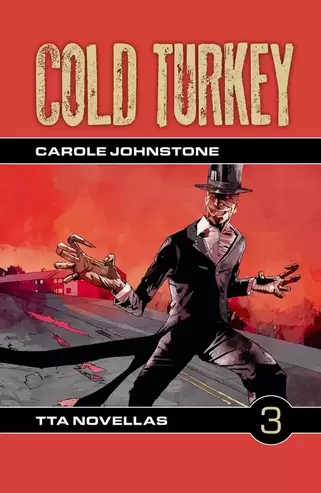
COLD TURKEY by Carole Johnstone
Other than the odd sneaky cigarette when I was a kid and the occasional Christmas cigar, I have never been a smoker. My parents had long given up by the time I came along so it has not been a significant part of my life. All my school friends and many of my workmates indulged, but not I. However, after watching others go through the misery of coming off the fags, I never take that ordeal lightly. If you, like me, have never had to endure this particular form of cold turkey, then reading Carole Johnstone’s novella might give you some idea of how tough it is.
Raym has made the decision. There are two good reasons why he needs to throw away his Silk Cuts and Ultra Lights but working as a teacher in a deprived area of Scotland as part of a world-weary, disillusioned teaching team and clinging on to a worn-out, crumbling relationship, does not make success likely. Raym’s torment doesn’t end there. Sinister forces have been awakened by his attempt at self-denial and the weave of reality itself has begun to fray. Central to this story is a creature who deserves his place in the Horror Monster Hall of Fame, right there beside Randall Flagg, Freddy Krueger, Pinhead, Pennywise and the Library Policeman. Completely original and sodden with the surreal menace of the monsters from our childhood nightmares (he reminded me of the terrifying Tickly Lady of my own infant night terrors, you may laugh, but she would wake me crying for my mum on many a dark night when I was five) Top Hat is a magnificently malevolent creation.
A mature, knowing, writing style, a gritty, real-world setting, a protagonist who is likeable but ground down and weakened by his life choices (a somewhat common character-trait in independent press horror, but, a convincing one nonetheless) and a brooding sense of terror that stretches across the narrative like a tobacco-stinking shadow makes Cold Turkey a compelling, intelligent page-turner that I consumed in three drags...sorry, sittings. So, go on, try it. One page won’t hurt you and, remember, you can give it up any time you want.
COLD TURKEY by Carole Johnstone
TTA Press
Buy it Here
Other than the odd sneaky cigarette when I was a kid and the occasional Christmas cigar, I have never been a smoker. My parents had long given up by the time I came along so it has not been a significant part of my life. All my school friends and many of my workmates indulged, but not I. However, after watching others go through the misery of coming off the fags, I never take that ordeal lightly. If you, like me, have never had to endure this particular form of cold turkey, then reading Carole Johnstone’s novella might give you some idea of how tough it is.
Raym has made the decision. There are two good reasons why he needs to throw away his Silk Cuts and Ultra Lights but working as a teacher in a deprived area of Scotland as part of a world-weary, disillusioned teaching team and clinging on to a worn-out, crumbling relationship, does not make success likely. Raym’s torment doesn’t end there. Sinister forces have been awakened by his attempt at self-denial and the weave of reality itself has begun to fray. Central to this story is a creature who deserves his place in the Horror Monster Hall of Fame, right there beside Randall Flagg, Freddy Krueger, Pinhead, Pennywise and the Library Policeman. Completely original and sodden with the surreal menace of the monsters from our childhood nightmares (he reminded me of the terrifying Tickly Lady of my own infant night terrors, you may laugh, but she would wake me crying for my mum on many a dark night when I was five) Top Hat is a magnificently malevolent creation.
A mature, knowing, writing style, a gritty, real-world setting, a protagonist who is likeable but ground down and weakened by his life choices (a somewhat common character-trait in independent press horror, but, a convincing one nonetheless) and a brooding sense of terror that stretches across the narrative like a tobacco-stinking shadow makes Cold Turkey a compelling, intelligent page-turner that I consumed in three drags...sorry, sittings. So, go on, try it. One page won’t hurt you and, remember, you can give it up any time you want.
COLD TURKEY by Carole Johnstone
TTA Press
Buy it Here
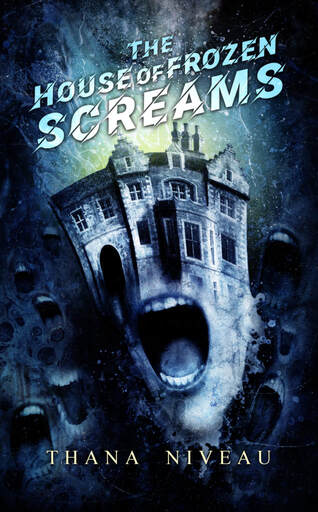
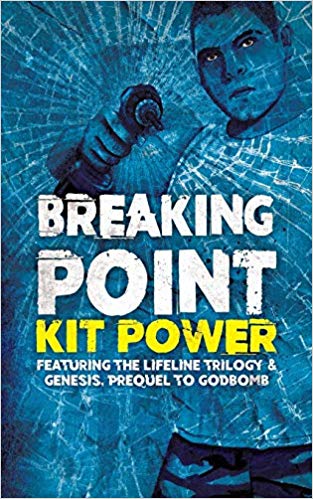
|
THE HOUSE OF FROZEN SCREAMS by Thana Niveau
Yes, this is a haunted house novel. And yes, as the story opens, there is something warm and reassuring about this old house with a dubious past. You know the one, the antique pile some find unsettling from the moment they walk through its front door, and that others feel is a dream come true. The House of Frozen Screams wraps a soft Midsummer Murder blanket about the shoulders of the seasoned horror reader. You know what’s going to happen and you are going to settle in and enjoy this ghost train because it is an old friend. But don’t be deceived. This is an intense and increasingly disturbing read. There is far more going on within the walls of Wintergate House than mere bumps in the night. There are shades of The Shining and a distinctly Adam Nevill bleakness here as the ghost trains picks up speed and the reader realises that it is, in fact, out of control. The story spirals inwards until the outside world fades away and there is only the house and its secrets. One by one each glimmer of hope is extinguished. The walls between past and present are weakened and begin to break down. And then, in the climactic moments, the train is thrown off the track completely and plunges into a new and even more unnerving tunnel. Thana Nivea’s novel is a delight. The prose style is clear and bright. The house itself is vividly drawn and easy to visualise. The reader is quickly drawn into the minds and feelings of the protagonists and the events that unfold are seen sharply through their eyes. The central relationship between Liz and Nick is a touching one, loving without being schmaltzy. The cast of characters are well drawn, although a little clichéd in places with a couple of characters who are standard haunted house accessories, but these are thoroughly likeable, in one case, and deliciously unpleasant, but well-meaning, in the other. And it does nothing to distract from the psychological roller-coaster that you will ride through The House of Frozen Screams. A compelling page-turner, this is a welcome addition to the haunted house shelf of your horror novel collection. THE HOUSE OF FROZEN SCREAMS by Thana Niveau Horrific Tales Buy it Here BREAKING POINT by Kit Power This slim volume packs a mean punch. A quartet of passionately written, gritty, brutal tales that bleed violence and raw emotion from their outer skin, but, beneath, hold something much deeper and pointed to say about the human condition. Fear, sadism, toxic suspicion, desperation, and loneliness and grief are the engines of these character’s wild acts. Mixed in with a healthy dose of self-preservation and the need to keep what you believe to be yours. This heady brew is what drives the desperate acts and extreme measures taken by Kit Power's cast. What would you do to survive? What do you do with your suspicions, even if you have no proof? What do you do when even God won’t help you? The writing is direct and pacey. It has a pulp feel, but also an oddly old-fashioned tone. It’s as if these stories were written in the 1950s, because, there, in the mayhem, is an incongruous English politeness that lends the stories a measure of charm this type of story would normally lack. There is also a vein of what felt like very arch and deeply black humour in the book. An attitude of "you want to know how low humans can sink, how extreme their actions can be when the chips are down? Then here it is." If I had a favourite, difficult in a collection such as this, it would be The Debt. The tale of a man being sucked into a maelstrom of debt from which there seems no rescue until he is offered a lifeline, albeit a thorny one, that leads him to an act of horrible brutality. Oh, and as a bonus, one of the stories in Breaking Point is a prequel to Kit Power's highly acclaimed novel, Godbomb. BREAKING POINT by Kit Power Sinister Horror Company Paperback £7 |
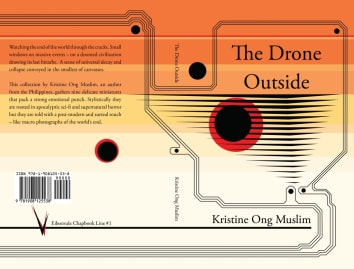
THE DRONE OUTSIDE by Kristine Ong Muslim
Part of the Eibonvale Press chapbook range, The Drone Outside by Kristine Ong Muslim is a curious mini-collection that swerves effortlessly between science fiction, drama and horror, by way of slipstream. The beauty of this book is that the author explains nothing. These things happened and that is all there is to it.
The worlds and situations created by Muslim are wondrous, often tantalising glimpses of the alien, disturbing and strange. For example, a planet where night can last up to 42 years and all the inconvenience and human adaptation that it brings about, including the ability, in one case, to dream dreams in sequence for several “nights” running. The ramifications of an undisclosed apocalypse, the loneliness of the survivors coupled with a history of humanity’s cruelties and folly. And the opener, my favourite, Kilroy Was Here, which is a barnstormer full of action and imaginative world-building. Again, tantalising in the glimpses it gives of the world in which the story takes place.
None of these stories are particularly long. The highest word-count belongs to Early Signs of Blight, the nearest to a straight horror story Muslim comes in this collection. This tale takes the traditional monsters-under-the-bed trope and spins it into something altogether different. Something deeper and tender.
My criticism. if criticism it is, is that the stories are, in some cases, too short. Yes, they leave me wanting more which is always a good measure of a piece of writing, but there seems to be much greater things hiding behind the facade of these vignettes. Something I wanted explored. It left me a little frustrated at time.
As always with Eibonvale Press, the cover art and presentation of the book is superb.
So, take a brief trip into Kristine Ong Muslim’s strange world. It won’t smother you and you won’t drown but you will want to go back there.
THE DRONE OUTSIDE by Kristine Ong Muslim
Eibonvale Press
Hardback £12
Paperback £6
ISBN: 978-1-908125-53-8
Part of the Eibonvale Press chapbook range, The Drone Outside by Kristine Ong Muslim is a curious mini-collection that swerves effortlessly between science fiction, drama and horror, by way of slipstream. The beauty of this book is that the author explains nothing. These things happened and that is all there is to it.
The worlds and situations created by Muslim are wondrous, often tantalising glimpses of the alien, disturbing and strange. For example, a planet where night can last up to 42 years and all the inconvenience and human adaptation that it brings about, including the ability, in one case, to dream dreams in sequence for several “nights” running. The ramifications of an undisclosed apocalypse, the loneliness of the survivors coupled with a history of humanity’s cruelties and folly. And the opener, my favourite, Kilroy Was Here, which is a barnstormer full of action and imaginative world-building. Again, tantalising in the glimpses it gives of the world in which the story takes place.
None of these stories are particularly long. The highest word-count belongs to Early Signs of Blight, the nearest to a straight horror story Muslim comes in this collection. This tale takes the traditional monsters-under-the-bed trope and spins it into something altogether different. Something deeper and tender.
My criticism. if criticism it is, is that the stories are, in some cases, too short. Yes, they leave me wanting more which is always a good measure of a piece of writing, but there seems to be much greater things hiding behind the facade of these vignettes. Something I wanted explored. It left me a little frustrated at time.
As always with Eibonvale Press, the cover art and presentation of the book is superb.
So, take a brief trip into Kristine Ong Muslim’s strange world. It won’t smother you and you won’t drown but you will want to go back there.
THE DRONE OUTSIDE by Kristine Ong Muslim
Eibonvale Press
Hardback £12
Paperback £6
ISBN: 978-1-908125-53-8
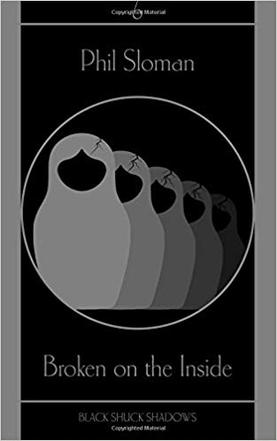
BROKEN ON THE INSIDE by Phil Sloman
Phil Sloman’s collection, Broken on the Inside is a Black Shuck Shadow Books publication. It is, like the others in the series, a beautifully presented pocketbook whose diminished proportions belie the richness of what lies inside. From the outset, the author carries out a skilfully observed dissection of the human condition. Celebrity, familial relationships, eating disorders, all are tackled face-on, but beneath the black humour and elements of horror, are underlain with sensitivity and an empathetic understanding of the plight of these people.
The collection opens with the title story and takes the reader of a vividly realised journey of recovery for a woman who is both plagued by ill-health and bullied by an overbearing, manipulative mother. A miracle cure promises to repair the woman’s physical and psychological ills. It is an experimental cure, but what could possibly go wrong? Discomfort Food, which follows, is a glimpse into the endless conflict we humans have with food. For many, of course, it is the daily battle to find enough to keep us alive, for others, particularly here in the West, it is a battle with plenty and its resulting psychological dilemmas and issues of guilt, restraint and self-image. Sloman’s wit is particularly sharp here, using the absurd to skilfully illuminate the tragic.
The Man Who Fed Foxes opens with its protagonist sitting in the neglected garden that was once his pride and joy. The Groundhog song Garden (it’s on their Thank Christ for the Bomb album, listen to it and you’ll see what I mean) was cycling through my head for the duration of this story. The tale itself is a moving account of a man’s fall from pride to depression. The story’s last line is priceless.
The indignities and loneliness of old age are uncomfortably examined in There Was An Old Man, loneliness compounded by physical weakness and when the darkness begins, the disregard the rest of the world exercises towards the elderly and their plight (another song will play itself through your head as theme music for this one, you’ll know what it is when you read it). I found There was An Old Man to be the most disturbing and visceral story of the collection. Finally, in Virtually Famous, we enter the borderlands where celebrity and virtual reality collide, although, surely the world of the celebrity is virtual, anyway, because it bears little resemblance to what the rest of us experience as reality, and reality is at the heart of this tale. It’s nature, the demarcation between it and the virtual and the dubious uses to which the ambiguity can be put.
Broken on the Inside; thoroughly recommended, a quick, savage read, but at the same time, a long, disturbing journey inwards. Keep an eye on Phil Sloman, he’s good and he deserves a bigger audience.
BROKEN ON THE INSIDE by Phil Sloman
Black Shuck Books
Paperback £5
ISBN-13: 978-1719049009
BROKEN ON THE INSIDE by Phil Sloman
Phil Sloman’s collection, Broken on the Inside is a Black Shuck Shadow Books publication. It is, like the others in the series, a beautifully presented pocketbook whose diminished proportions belie the richness of what lies inside. From the outset, the author carries out a skilfully observed dissection of the human condition. Celebrity, familial relationships, eating disorders, all are tackled face-on, but beneath the black humour and elements of horror, are underlain with sensitivity and an empathetic understanding of the plight of these people.
The collection opens with the title story and takes the reader of a vividly realised journey of recovery for a woman who is both plagued by ill-health and bullied by an overbearing, manipulative mother. A miracle cure promises to repair the woman’s physical and psychological ills. It is an experimental cure, but what could possibly go wrong? Discomfort Food, which follows, is a glimpse into the endless conflict we humans have with food. For many, of course, it is the daily battle to find enough to keep us alive, for others, particularly here in the West, it is a battle with plenty and its resulting psychological dilemmas and issues of guilt, restraint and self-image. Sloman’s wit is particularly sharp here, using the absurd to skilfully illuminate the tragic.
The Man Who Fed Foxes opens with its protagonist sitting in the neglected garden that was once his pride and joy. The Groundhog song Garden (it’s on their Thank Christ for the Bomb album, listen to it and you’ll see what I mean) was cycling through my head for the duration of this story. The tale itself is a moving account of a man’s fall from pride to depression. The story’s last line is priceless.
The indignities and loneliness of old age are uncomfortably examined in There Was An Old Man, loneliness compounded by physical weakness and when the darkness begins, the disregard the rest of the world exercises towards the elderly and their plight (another song will play itself through your head as theme music for this one, you’ll know what it is when you read it). I found There was An Old Man to be the most disturbing and visceral story of the collection. Finally, in Virtually Famous, we enter the borderlands where celebrity and virtual reality collide, although, surely the world of the celebrity is virtual, anyway, because it bears little resemblance to what the rest of us experience as reality, and reality is at the heart of this tale. It’s nature, the demarcation between it and the virtual and the dubious uses to which the ambiguity can be put.
Broken on the Inside; thoroughly recommended, a quick, savage read, but at the same time, a long, disturbing journey inwards. Keep an eye on Phil Sloman, he’s good and he deserves a bigger audience.
BROKEN ON THE INSIDE by Phil Sloman
Black Shuck Books
Paperback £5
ISBN-13: 978-1719049009
_____________________________________________________________
ANGELS OF THE SILENCES by Simon Bestwick
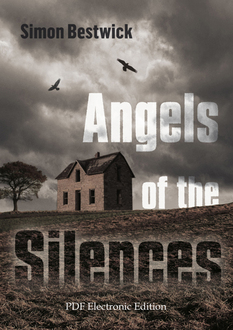
Horror can be moving.
No, I don’t mean the angst-ridden drivel dished out by imagination-deficient film and TV producers, filled with moody heart-torn vampires and all the rest. I mean real horror and real emotion and heartbreak. Like Simon Bestwick’s novella, Angels of the Silences.
Two teenage girls have the kind of friendship we only often experience once in our lives. More sisters than blood sisters, spiky, argumentative but loyal and close, two sides of the same coin. That sort of friendship can’t be broken easily, even by death. And a terrible death at that. Yet, somehow, they are still “alive”, fleshed, clothed, and human in all but heartbeat.
There is a way to move on, but neither are inclined to do so, because, perhaps, there is a reason they’re still here on earth in the land of the breathing, where they go about their daily lives with their status unsuspected by friends and family alike. There is, they suspect, unfinished business.
But when the time comes, when is it right to move on and leave everyone and everything they love behind them?
Angels of the Silences is short, sharp and for me, immensely touching. The two girls are complete, three-dimensional, recognisable. Their plight as utterly realistic, yes, realistic, because there are dilemmas here; who to tell, how to deal with parents and other loved ones, with the possibility that the truth will out and that there will be questions, torment, terrible grief.
A compelling, intelligent and affecting story with a beautifully atmospheric cover by Neil Williams Angels of the Silences is one of those brief but startling works that we stumble upon very now and then. Read it and I dare you not to be moved.
THE ANGELS OF THE SILENCES by Simon Bestwick
Pendragon Press
Chapbook £3
ISBN 9781906864231
No, I don’t mean the angst-ridden drivel dished out by imagination-deficient film and TV producers, filled with moody heart-torn vampires and all the rest. I mean real horror and real emotion and heartbreak. Like Simon Bestwick’s novella, Angels of the Silences.
Two teenage girls have the kind of friendship we only often experience once in our lives. More sisters than blood sisters, spiky, argumentative but loyal and close, two sides of the same coin. That sort of friendship can’t be broken easily, even by death. And a terrible death at that. Yet, somehow, they are still “alive”, fleshed, clothed, and human in all but heartbeat.
There is a way to move on, but neither are inclined to do so, because, perhaps, there is a reason they’re still here on earth in the land of the breathing, where they go about their daily lives with their status unsuspected by friends and family alike. There is, they suspect, unfinished business.
But when the time comes, when is it right to move on and leave everyone and everything they love behind them?
Angels of the Silences is short, sharp and for me, immensely touching. The two girls are complete, three-dimensional, recognisable. Their plight as utterly realistic, yes, realistic, because there are dilemmas here; who to tell, how to deal with parents and other loved ones, with the possibility that the truth will out and that there will be questions, torment, terrible grief.
A compelling, intelligent and affecting story with a beautifully atmospheric cover by Neil Williams Angels of the Silences is one of those brief but startling works that we stumble upon very now and then. Read it and I dare you not to be moved.
THE ANGELS OF THE SILENCES by Simon Bestwick
Pendragon Press
Chapbook £3
ISBN 9781906864231
__________________________________________________________
THE SIGNAL BLOCK AND OTHER STORIES by Frank Duffy

(Awaiting cover image)
As far as I can remember, I have never read any of Frank Duffy’s work before, so I approached this collection with that pleasant sense of anticipation reserved for the first-time reading experience; anticipation mixed with trepidation because the experience can go either way.
I’m delighted to announce that I was far from disappointed. Not only does Frank Duffy write a mean story, he writes it well and this collection is one hell of a journey. A dark one, mind. Don’t expect comfort, relief or mercy. This book takes you into the nightside and its author doesn’t hold your hand or tell you that everything’s going to be all right, because it isn’t.
Duffy’s bleak collection is suffused with a malevolent subtlety. The author understands the mechanism for turning an idea into an intelligent story. His ideas are from the shadowed regions of this and other worlds, and, more importantly, from the murky depths of the human psyche. Yes, this is a book of supernatural tales, but the real strength of the work is the way Duffy inextricably melds the very human angst of his characters with the attributes of the monsters that torment, and sometimes destroy, them.
There is an M R Jamesian feel to this, in that the monsters and monstrousness are not always explained. They just are. And they are right. They fit, they are a consequence, by which I don’t mean folk tale come-uppance monsters. Duffy’s monsters are far more subtle, much more entangled with the protagonist’s own personal demons. Another comparison I would make is to the urban horror of Gary McMahon. These narratives are similar graffiti from the back streets of the human soul.
The Signal Block opens the book and takes us, with a film crew, into the grim, dank walls of a former prison that was once besieged by the relatives of the wretched inmates. The Object follows hard on its heels and is a visceral, visual story that reeks of rotting wood, mud and the sweat of unease. Scant Offerings for the Birds is the third tale and, in its way, a much more straightforward narrative about a photographer who makes money from some very unsavoury images. And so we move on via such disturbances as a strange village in which the characters seem to be the protagonists in some grotesque show, a haunted church that resonates with a man’s past, the lingering reverberations of past atrocities that are suddenly more than shadows, cutting edge art, which really does draw blood and my own personal favourite, Permanent Hunger which tells of a horrible government-backed experiment in population control.
I have deliberately kept my descriptions of these works vague because this book needs to be approached fresh and without foreknowledge. Its unpredictability is part of the…well, I was going to say fun but I’m not sure if that is the right word for such a voyage into the desolate.
Is this meal best eaten whole or nibbled at? I think the latter. I did find the bleakness of these stories wearing when consumed one after the other. A regular visit would be my recommendation, preferably late at night. And alone.
THE SIGNAL BOX AND OTHER STORIES by Frank Duffy
Published by Sideshow Press
Paperback - Awaiting price information
As far as I can remember, I have never read any of Frank Duffy’s work before, so I approached this collection with that pleasant sense of anticipation reserved for the first-time reading experience; anticipation mixed with trepidation because the experience can go either way.
I’m delighted to announce that I was far from disappointed. Not only does Frank Duffy write a mean story, he writes it well and this collection is one hell of a journey. A dark one, mind. Don’t expect comfort, relief or mercy. This book takes you into the nightside and its author doesn’t hold your hand or tell you that everything’s going to be all right, because it isn’t.
Duffy’s bleak collection is suffused with a malevolent subtlety. The author understands the mechanism for turning an idea into an intelligent story. His ideas are from the shadowed regions of this and other worlds, and, more importantly, from the murky depths of the human psyche. Yes, this is a book of supernatural tales, but the real strength of the work is the way Duffy inextricably melds the very human angst of his characters with the attributes of the monsters that torment, and sometimes destroy, them.
There is an M R Jamesian feel to this, in that the monsters and monstrousness are not always explained. They just are. And they are right. They fit, they are a consequence, by which I don’t mean folk tale come-uppance monsters. Duffy’s monsters are far more subtle, much more entangled with the protagonist’s own personal demons. Another comparison I would make is to the urban horror of Gary McMahon. These narratives are similar graffiti from the back streets of the human soul.
The Signal Block opens the book and takes us, with a film crew, into the grim, dank walls of a former prison that was once besieged by the relatives of the wretched inmates. The Object follows hard on its heels and is a visceral, visual story that reeks of rotting wood, mud and the sweat of unease. Scant Offerings for the Birds is the third tale and, in its way, a much more straightforward narrative about a photographer who makes money from some very unsavoury images. And so we move on via such disturbances as a strange village in which the characters seem to be the protagonists in some grotesque show, a haunted church that resonates with a man’s past, the lingering reverberations of past atrocities that are suddenly more than shadows, cutting edge art, which really does draw blood and my own personal favourite, Permanent Hunger which tells of a horrible government-backed experiment in population control.
I have deliberately kept my descriptions of these works vague because this book needs to be approached fresh and without foreknowledge. Its unpredictability is part of the…well, I was going to say fun but I’m not sure if that is the right word for such a voyage into the desolate.
Is this meal best eaten whole or nibbled at? I think the latter. I did find the bleakness of these stories wearing when consumed one after the other. A regular visit would be my recommendation, preferably late at night. And alone.
THE SIGNAL BOX AND OTHER STORIES by Frank Duffy
Published by Sideshow Press
Paperback - Awaiting price information
____________________________________________________________________________________________
ABOLISHER OF ROSES by Gary Fry
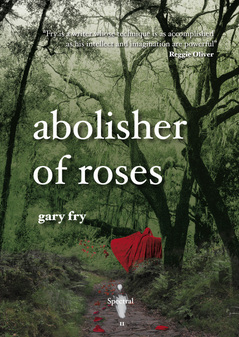
One thing writers are told to do by the many people wanting to give them advice is to “show, not tell”, in other words, to get the reader into the head and behind the eyes of their characters and to be more than a mere camera but to actually relay feeling and emotion. In this, the writer’s advisors are right, and certainly more helpful than the “Why not send you stories to Reader’s Digest?” type of helpfulness I still receive from some of my relatives. Well, Gary Fry has certainly followed the former direction within the pages of this new, and gorgeously presented, Spectral Press chapbook, Abolisher of Roses. You are Peter, awful as he is, and by an odd process of transference, intensely sympathetic towards his long-suffering and suddenly strong wife.
The chapbook’s strange title is taken from a quotation by James Russell Lowell, by the way, and perfectly fits the story itself.
Abolisher of Roses is the second release from the intriguing Spectral Press and is a visceral, vivid tale of art-for-art’s-sake versus a positively Thatcherite materialism and a view of worth as belonging only to something that serves a practical purpose or makes money. Pete, a successful businessman, the eponymous self-made man, is reluctantly attending a new and novel art exhibition, where his wife, her artistic talent newly discovered, is one of the exhibitors. Not only is this recent pastime ridiculous to Pete, it is also vaguely threatening, because the woman he has dominated all his married life has found her own way and developed a measure of physical and emotional independence. Pete’s contempt for all things arty and those he feels are basically hippy timewasters is convincing and one we have all encountered in our weary journey through the world.
A veteran of horror both supernatural and non-occult, I have to admit that I thought I had worked out what Pete was going to find in the woods that day, but I was not entirely correct. The exhibits hidden among the trees were far more subtle - and the more shattering for that.
As always, Gary Fry not only entertains, but poses some interesting questions, and manages to successfully balance the two. He is a writer of intelligent horror in every sense of the word and deserves much wider attention than he currently receives.
ABOLISHER OF ROSES by Gary Fry
Published by Spectral Press
Paperback £3.00
_________________________________________________________________________________
The chapbook’s strange title is taken from a quotation by James Russell Lowell, by the way, and perfectly fits the story itself.
Abolisher of Roses is the second release from the intriguing Spectral Press and is a visceral, vivid tale of art-for-art’s-sake versus a positively Thatcherite materialism and a view of worth as belonging only to something that serves a practical purpose or makes money. Pete, a successful businessman, the eponymous self-made man, is reluctantly attending a new and novel art exhibition, where his wife, her artistic talent newly discovered, is one of the exhibitors. Not only is this recent pastime ridiculous to Pete, it is also vaguely threatening, because the woman he has dominated all his married life has found her own way and developed a measure of physical and emotional independence. Pete’s contempt for all things arty and those he feels are basically hippy timewasters is convincing and one we have all encountered in our weary journey through the world.
A veteran of horror both supernatural and non-occult, I have to admit that I thought I had worked out what Pete was going to find in the woods that day, but I was not entirely correct. The exhibits hidden among the trees were far more subtle - and the more shattering for that.
As always, Gary Fry not only entertains, but poses some interesting questions, and manages to successfully balance the two. He is a writer of intelligent horror in every sense of the word and deserves much wider attention than he currently receives.
ABOLISHER OF ROSES by Gary Fry
Published by Spectral Press
Paperback £3.00
_________________________________________________________________________________
THE HOUSE OF CANTED STEPS by Gary Fry
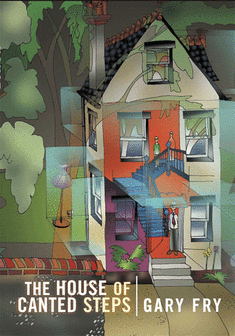
There is an interesting quote from the American anthropologist Margaret Mead about two thirds of the way into Gary Fry’s The House of Canted Steps. I’ll paraphrase it because I don’t want any corporate lawyers banging on my door with writs and accusations of copyright infringement. Mead said that the modern family unit is unnatural, shut away as it is with no extended familial support. It is, she says, an almost impossible situation. I tend to agree (although interfering relatives can also be a big problem!) Well, the modern Western family unit and its infinite permutations , complexities and cross pollination is at the very root of Fry’s novel and makes for a ghost story, and more particularly a haunted house, of a very unique kind.
From the very first page you know you’re about to have dealings with a malevolent and discomforting pile of bricks and mortar, familiar ground, comforting in its way. I love ghost stories and haunted house stories are the best of them all. Here we have Mark the Estate Agent (an unlikely hero for a 21st Century novel) who is divorced, missing his son, and trying to come to terms with both his feelings and the reality of his situation. There is his girlfriend, an almost impossibly understanding and loving young woman with dark secrets of her own buried deep beneath her gorgeous, sunny exterior. There is also the ex, shallow, materialistic, satisfied, at last, in the arms of her successful and flash new partner. And there’s Lewis, the apple of Mark’s eye, a personable likeable little fella who is soon the centre of the house’s baleful attention.
Ghost stories are often about revenge, redemption or justice. Some supernatural force, seeking to exact recompense from whatever unwitting fool utterly stupid enough to buy that particular property or stay in that particular room in that particular hotel. Sometimes there is a genuine injustice to right, the house was built, for example, on hallowed ground by ruthless moneymen who are uncaring of the souls they have disturbed. With Stephen King it is often what he calls, chillingly, a Bad Place, a building in which evil has occurred then soaked into its very fabric.
But this house, with its strange and instantly unnerving canted staircase, with its big, overgrown garden and sheer, luxurious self-indulgent proportions, has a different problem. It is possessed, not by demons, but by a twisted morality that manifests itself in subtle, all but unnoticeable changes in the hearts and minds of anyone who either lives there or so much as darkens its door.
The House of Canted Steps is a fascinating and unsettling ride. It is well written, perfectly paced, the characters are well drawn, the horrors revealed, not in a blood-soaked, breathless rush but slowly, carefully and convincingly. There are few screams, no spilled blood, although there is blood, in more than one sense of the word. There are revelations and shocks but all of them rooted solidly in reality, in the mundane. The real horrors are quietly spoken and familiar.
There were moments when Fry’s restrained style was, perhaps, a little too restrained, when I wanted a shock, a little breathlessness. However, perhaps, the fact that they were revealed in such a matter of fact way fitted more with the tone of the book, that the supernatural darkness is simply an extension of the corporeal one.
What came through was Fry’s insight and intelligence, that he is saying something worth hearing. Not giving us a morality tale or the Hollywood sledgehammer treatment, but analysing the ties that bind, and sometime strangle, us. He is one of our more thoughtful writers, someone with something to say and the means and skill by which to say it.
The book itself is an attractive item, by the way, with a marvellously eccentric cover by James Hannah that sums up the story perfectly.
So, recommended for family members everywhere and particularly anyone with a ghost to face.
That’s all of us then.
THE HOUSE OF CANTED STEPS by Gary Fry
Published by PS
Hardback £19.99
ISBN 978-1-848631-02-1
________________________________________________________________________________
From the very first page you know you’re about to have dealings with a malevolent and discomforting pile of bricks and mortar, familiar ground, comforting in its way. I love ghost stories and haunted house stories are the best of them all. Here we have Mark the Estate Agent (an unlikely hero for a 21st Century novel) who is divorced, missing his son, and trying to come to terms with both his feelings and the reality of his situation. There is his girlfriend, an almost impossibly understanding and loving young woman with dark secrets of her own buried deep beneath her gorgeous, sunny exterior. There is also the ex, shallow, materialistic, satisfied, at last, in the arms of her successful and flash new partner. And there’s Lewis, the apple of Mark’s eye, a personable likeable little fella who is soon the centre of the house’s baleful attention.
Ghost stories are often about revenge, redemption or justice. Some supernatural force, seeking to exact recompense from whatever unwitting fool utterly stupid enough to buy that particular property or stay in that particular room in that particular hotel. Sometimes there is a genuine injustice to right, the house was built, for example, on hallowed ground by ruthless moneymen who are uncaring of the souls they have disturbed. With Stephen King it is often what he calls, chillingly, a Bad Place, a building in which evil has occurred then soaked into its very fabric.
But this house, with its strange and instantly unnerving canted staircase, with its big, overgrown garden and sheer, luxurious self-indulgent proportions, has a different problem. It is possessed, not by demons, but by a twisted morality that manifests itself in subtle, all but unnoticeable changes in the hearts and minds of anyone who either lives there or so much as darkens its door.
The House of Canted Steps is a fascinating and unsettling ride. It is well written, perfectly paced, the characters are well drawn, the horrors revealed, not in a blood-soaked, breathless rush but slowly, carefully and convincingly. There are few screams, no spilled blood, although there is blood, in more than one sense of the word. There are revelations and shocks but all of them rooted solidly in reality, in the mundane. The real horrors are quietly spoken and familiar.
There were moments when Fry’s restrained style was, perhaps, a little too restrained, when I wanted a shock, a little breathlessness. However, perhaps, the fact that they were revealed in such a matter of fact way fitted more with the tone of the book, that the supernatural darkness is simply an extension of the corporeal one.
What came through was Fry’s insight and intelligence, that he is saying something worth hearing. Not giving us a morality tale or the Hollywood sledgehammer treatment, but analysing the ties that bind, and sometime strangle, us. He is one of our more thoughtful writers, someone with something to say and the means and skill by which to say it.
The book itself is an attractive item, by the way, with a marvellously eccentric cover by James Hannah that sums up the story perfectly.
So, recommended for family members everywhere and particularly anyone with a ghost to face.
That’s all of us then.
THE HOUSE OF CANTED STEPS by Gary Fry
Published by PS
Hardback £19.99
ISBN 978-1-848631-02-1
________________________________________________________________________________
A TOUR OF BEAUJARDIN by Marc Lowe
Beaujardin is, presumably - nay hopefully, a mythical city straight from the mind of Rhode Island-based author, Marc Lowe. At first glance the place is a little strange, the tall buildings, for example, are all leaning in the same direction in one part of town and in the opposite direction in another. The streets are busy, there is heavy traffic, there a places to eat and drink, but nothing untoward.
Written as the informative narrative of your own personal city guide, A Tour of Beaujardin is one of the most intriguing and satisfying novellae I’ve read for some time. The guide himself is witty, erudite and obviously a long time dweller in the city. He knows is intimately, knows it light and its shade and, if you take the premium tour, can show you dark corners of the place no one could ever find without a little help.
There is, all the way through, a sense of mounting threat, a hinted-at malevolence that manifests itself in extreme versions of the type of shadow that haunts any modern conurbation. What separates this work from so many urban fantasies is the dexterity with which the commonplace is contorted into malevolent strangeness. As we stroll between those oddly bent skyscrapers alongside roads on which citizens die under the wheels of the relentless traffic with alarming regularity, we are assailed by too-close-to-reality horrors of despair, violence and political oppression.
And always, there is the unease of the tour guide, the sense that he is somehow transgressing by revealing certain facts and unveiling certain places. He really shouldn’t be telling you this but…
In 47 short pages you learn and, more importantly, feel this city. You learn about its religion, its social divides, the dangerous and the beautiful. It is all but sentient, all but alive. And in the hands of it author, three-dimensional and real enough to touch, smell and run from.
Parallel and parable of our own sprawling and half-mad metropolises? No doubt, but there is more than a mere mirror-holding here, there is a strange precision, everything is logical, making sense within its context. The threat and darkness are not overdone, but it’s there and it won’t go away. It oppresses and closes in relentlessly. It seems to come from everywhere, from uptown and downtown, creeping in from the clean and shiny, welling up from the dark and dingy.
Inventive and clever, vivid and visceral, A Tour of Beaujardin is a tour de force of subtle imagining, laden with wit and sharp observation. Buy your ticket now, but make sure you take a map, because you may have to find your own way out.
A TOUR OF BEAUJARDIN by Marc Lowe
Published by ISMS Press
Paperback £3.00 Sein und Werden, 19 Aidan's Grove, Salford, Lancashire. M7 3TN UK or from
[email protected]
_________________________________________________________________________________
Written as the informative narrative of your own personal city guide, A Tour of Beaujardin is one of the most intriguing and satisfying novellae I’ve read for some time. The guide himself is witty, erudite and obviously a long time dweller in the city. He knows is intimately, knows it light and its shade and, if you take the premium tour, can show you dark corners of the place no one could ever find without a little help.
There is, all the way through, a sense of mounting threat, a hinted-at malevolence that manifests itself in extreme versions of the type of shadow that haunts any modern conurbation. What separates this work from so many urban fantasies is the dexterity with which the commonplace is contorted into malevolent strangeness. As we stroll between those oddly bent skyscrapers alongside roads on which citizens die under the wheels of the relentless traffic with alarming regularity, we are assailed by too-close-to-reality horrors of despair, violence and political oppression.
And always, there is the unease of the tour guide, the sense that he is somehow transgressing by revealing certain facts and unveiling certain places. He really shouldn’t be telling you this but…
In 47 short pages you learn and, more importantly, feel this city. You learn about its religion, its social divides, the dangerous and the beautiful. It is all but sentient, all but alive. And in the hands of it author, three-dimensional and real enough to touch, smell and run from.
Parallel and parable of our own sprawling and half-mad metropolises? No doubt, but there is more than a mere mirror-holding here, there is a strange precision, everything is logical, making sense within its context. The threat and darkness are not overdone, but it’s there and it won’t go away. It oppresses and closes in relentlessly. It seems to come from everywhere, from uptown and downtown, creeping in from the clean and shiny, welling up from the dark and dingy.
Inventive and clever, vivid and visceral, A Tour of Beaujardin is a tour de force of subtle imagining, laden with wit and sharp observation. Buy your ticket now, but make sure you take a map, because you may have to find your own way out.
A TOUR OF BEAUJARDIN by Marc Lowe
Published by ISMS Press
Paperback £3.00 Sein und Werden, 19 Aidan's Grove, Salford, Lancashire. M7 3TN UK or from
[email protected]
_________________________________________________________________________________
SEIN UND WERDEN: PHARMACOPOIEA edited by Rachel Kendall.
Sein und Werden is one of those great little magazines that cannot be pigeonholed but is always guaranteed to delight, shock and infuriate. Is it a horror magazine, a very, very dark fantasy publication, literature, avant garde? Well, all of those things and none. And, like a pill that will be good for you, it must be swallowed whole.
One of Sein und Werden's positives as far as I’m concerned is that each issue is themed. This one, Pharmacopoeia, has a medical flavour. Although don’t expect a nice cool compress to be applied to your fevered brow. Pharmacopoeia is a sharp injection, a surgeon approaching you with some bizarre and grisly-looking tool in his gloved hand and with a nasty smile behind his mask.
There are no traditionally evil doctors in these pages, or haunted hospitals and so forth, but there is invention and literary game-playing. Pills by Willie Smith is a fine example, a brief monologue of pill taking, of “black beauties" and “christmas trees" shaken from a bottle that enhance and protect from the world around us. Smith also gives us the equally brief Love Drugs which is a syringe-sharp prose-poem in praise of, well, you guessed it… Pockets by Zachary Scott Hamilton has a scavenger unearthing a very strange medicine bottle indeed, in a place where time doesn't seem as trustworthy as it should. Untitled #22 by Michael Mc Aloran is a walk in the dark with someone who claims to be dead - and may well be.
There is also mischief, a fine example of this being Noel Slobada’s Pluck. Black comedy this, and a warning to leave any so-called blemish alone. A visit to Dr Joe from New Mexico in the company of Michael Eastbrook sounds as if it is to be avoided, especially if you have a bad back.
Mark Howard Jones brings us Karas d’Cacasse, a dark tale set in post war Vienna. Someone is distributing infected penicillin with nightmarish results. Major Calloway needs to find the culprit fast. An intriguing tale of identity and medical horror, I wish it was a novel.
Poetry intersperses the prose and is no less dark and redolent of the threatening face of the medical, Marching Feet by Shannon Quinn has disease as “a thin voiced storyteller”, where the victim is “chemically chained to the ocean floor" but what by, the disease or the cure? Wet-suited doctors complete the surreal menace inherent in the piece. D H Sutherland warns us in Schizophrenia that “The pills never work…” This is a poem rife with imagery, and the wonderful line “future’s wicked price was time’s lot.” In Friday Night With a Pen Janann Dawkins introduces us to another type of chemical comfort and takes us on a headlong ride through an vivid and dizzying account of its effects, all mixed up in with a heady cocktail of science and jazz, all beautifully imagined by Zachary Scott Hamilton’s accompanying drawing, Palpitategraohic.
There are two stories I haven't mentioned. Song of the Impure: A Love Story by A A Garrison and Brauner’s Vision by Marc Lowe. The former is the longest work in the magazine. It is the futuristic story of Luke, a lonely euthanasiacist who uses the juices of his clients to feed a tank full of unappealing yet joy-giving creatures he keeps in his apartment. The world is collapsing in on itself around him, the city dissolving into violent anarchy, death on the streets but the creatures and their narcotic delights are Luke’s escape. A parable of our own, war-torn world, ourselves made comfortably numb by our televisions while the world is being torn apart? A totally engaging, original mix and one that left me wanting to read more of Garrison's work.
The latter is my favourite. Brauner is on his way to a Chinese pharmacy to pick up his wife's regular order of medicine when he himself is struck with a malady. The doctor at the clinic claims to be able to help him but the cure is as frightening as it is bizarre. A deft, odd story delivered in Lowe’s unique and intensely engaging style.
All this then, wrapped beneath a stylish, very attractive cover, and only £4! If you haven’t taken a Sein und Werden before, start now, with Pharmacopoeia, but please, stick to the dose.
SEIN UND WERDEN: PHARMACOPOIEA edited by Rachel Kendall
Published by ISMS Press
Paperback £4.00 Sein und Werden, 19 Aidan's Grove, Salford, Lancashire. M7 3TN UK or
from [email protected]
_______________________________________________________________________________________________________________
One of Sein und Werden's positives as far as I’m concerned is that each issue is themed. This one, Pharmacopoeia, has a medical flavour. Although don’t expect a nice cool compress to be applied to your fevered brow. Pharmacopoeia is a sharp injection, a surgeon approaching you with some bizarre and grisly-looking tool in his gloved hand and with a nasty smile behind his mask.
There are no traditionally evil doctors in these pages, or haunted hospitals and so forth, but there is invention and literary game-playing. Pills by Willie Smith is a fine example, a brief monologue of pill taking, of “black beauties" and “christmas trees" shaken from a bottle that enhance and protect from the world around us. Smith also gives us the equally brief Love Drugs which is a syringe-sharp prose-poem in praise of, well, you guessed it… Pockets by Zachary Scott Hamilton has a scavenger unearthing a very strange medicine bottle indeed, in a place where time doesn't seem as trustworthy as it should. Untitled #22 by Michael Mc Aloran is a walk in the dark with someone who claims to be dead - and may well be.
There is also mischief, a fine example of this being Noel Slobada’s Pluck. Black comedy this, and a warning to leave any so-called blemish alone. A visit to Dr Joe from New Mexico in the company of Michael Eastbrook sounds as if it is to be avoided, especially if you have a bad back.
Mark Howard Jones brings us Karas d’Cacasse, a dark tale set in post war Vienna. Someone is distributing infected penicillin with nightmarish results. Major Calloway needs to find the culprit fast. An intriguing tale of identity and medical horror, I wish it was a novel.
Poetry intersperses the prose and is no less dark and redolent of the threatening face of the medical, Marching Feet by Shannon Quinn has disease as “a thin voiced storyteller”, where the victim is “chemically chained to the ocean floor" but what by, the disease or the cure? Wet-suited doctors complete the surreal menace inherent in the piece. D H Sutherland warns us in Schizophrenia that “The pills never work…” This is a poem rife with imagery, and the wonderful line “future’s wicked price was time’s lot.” In Friday Night With a Pen Janann Dawkins introduces us to another type of chemical comfort and takes us on a headlong ride through an vivid and dizzying account of its effects, all mixed up in with a heady cocktail of science and jazz, all beautifully imagined by Zachary Scott Hamilton’s accompanying drawing, Palpitategraohic.
There are two stories I haven't mentioned. Song of the Impure: A Love Story by A A Garrison and Brauner’s Vision by Marc Lowe. The former is the longest work in the magazine. It is the futuristic story of Luke, a lonely euthanasiacist who uses the juices of his clients to feed a tank full of unappealing yet joy-giving creatures he keeps in his apartment. The world is collapsing in on itself around him, the city dissolving into violent anarchy, death on the streets but the creatures and their narcotic delights are Luke’s escape. A parable of our own, war-torn world, ourselves made comfortably numb by our televisions while the world is being torn apart? A totally engaging, original mix and one that left me wanting to read more of Garrison's work.
The latter is my favourite. Brauner is on his way to a Chinese pharmacy to pick up his wife's regular order of medicine when he himself is struck with a malady. The doctor at the clinic claims to be able to help him but the cure is as frightening as it is bizarre. A deft, odd story delivered in Lowe’s unique and intensely engaging style.
All this then, wrapped beneath a stylish, very attractive cover, and only £4! If you haven’t taken a Sein und Werden before, start now, with Pharmacopoeia, but please, stick to the dose.
SEIN UND WERDEN: PHARMACOPOIEA edited by Rachel Kendall
Published by ISMS Press
Paperback £4.00 Sein und Werden, 19 Aidan's Grove, Salford, Lancashire. M7 3TN UK or
from [email protected]
_______________________________________________________________________________________________________________
